
Quartz vs Quartzite: What Is the Difference?
Quartzite is a natural metamorphic stone quarried in solid slabs, while quartz is an engineered surface made from crushed quartz bound with resin. That one difference shapes everything else: quartzite handles heat and sun better but needs periodic sealing, and quartz skips the sealing but needs more care around hot pans.
You’ve probably heard both names in the same breath, and it’s no wonder people mix them up. The words are nearly identical, the slabs can look alike in photos, and plenty of quartz designs are made to imitate the veining of natural quartzite. Yet in a working kitchen they behave very differently, and the right choice depends on how you cook, how much upkeep you’ll accept and how the space is used.
Since 2007, Granite and Marble Designs has helped Denver homeowners, contractors and designers compare these two materials slab by slab, and the same questions come up in nearly every design consultation. People want to know which one is tougher, which one is cheaper, whether they can set a hot pan down and how to tell the two apart in a showroom.
In this guide, you’ll learn what each stone is made of, how quartz vs quartzite compares on heat, stains and sealing, what drives the cost of each, and which material fits different spaces in your home.
Quartz vs Quartzite at a Glance
The quickest way to see the difference between quartz and quartzite is side by side, because most of the trade-offs trace back to whether the slab came out of the ground or out of a factory. The table below sums up how the two compare on the points homeowners ask about most often.
| Feature | Quartz (engineered) | Quartzite (natural) |
|---|---|---|
| Origin | Manufactured from crushed quartz and polyester resin | Quarried natural metamorphic stone |
| Hardness | Hard and scratch resistant | Harder than granite, highly scratch resistant |
| Heat tolerance | Resin can scorch or discolor under hot pans | Handles heat well; trivets still advised |
| Stain resistance | Very low water absorption | Good once sealed; can stain if left unsealed |
| Sealing | Not needed | Periodic sealing, checked with a water-drop test |
| Sun and outdoor use | Not suited to outdoor kitchens | Better suited to outdoor and sunny spaces than quartz |
| Look | Consistent color and pattern | One-of-a-kind veining and crystalline depth |
| Relative cost | Usually lower to mid range | Usually higher |
| Best fit | Busy family kitchens, bathrooms, rentals | Showpiece islands, outdoor kitchens, luxury spaces |
A few patterns stand out once you read across the rows:
- Quartz wins on predictability, since every slab of a given color looks much the same and needs no sealing.
- Quartzite wins on toughness and heat, which matters most near cooktops and in sun-exposed spaces.
- The look is a matter of taste, but only quartzite gives you veining that no other slab will repeat.
What Each Stone Is Made Of
The names suggest a close family tie, but the two materials are made in completely different ways. Understanding where each one comes from explains why they wear, clean and age the way they do, and it’s also your strongest protection against buying a mislabeled slab.
Quartz: An Engineered Surface
Quartz countertops are manufactured in a factory rather than quarried from the earth. Quartz-based engineered stone is about 90 to 93 percent silica by weight, bound together with roughly 7 to 10 percent polyester resin, then pressed and cured into slabs. Pigments go in during manufacturing, which is why quartz can be made in solid whites, deep charcoals or marble-look patterns with near-perfect consistency.
That resin is what gives quartz its low water absorption and its easy daily care, but it’s also the material’s soft spot. Resin reacts to high heat and long sun exposure in ways natural stone does not, so quartz rewards a little caution around cooktops and windows. You can see the full range of colors on our page for quartz countertops in Denver, CO.
Quartzite: A Natural Metamorphic Stone
Quartzite starts as sandstone, and over millions of years heat and pressure deep in the earth fuse its quartz grains into a dense, crystalline rock, which is then quarried in blocks and sawn into slabs. Because nothing is added, every slab carries its own veining, color shifts and sparkle, and two slabs from the same block can still differ.
Quartzite is harder than granite, so it stands up well to knives and daily wear, but it’s also slightly porous, which is why it needs periodic sealing. Browse current options on our page for quartzite countertops in Denver, CO.
How to Tell Quartz From Quartzite
A slab’s label isn’t always reliable, and some softer stones are sold under the quartzite name, so these quick checks help you confirm what you’re buying:
- Look at the pattern across the full slab. Quartz repeats a consistent design, while quartzite veining wanders and changes.
- Check the edge and back of the slab. Natural stone shows the same mineral structure all the way through.
- Ask for the slab’s origin. A natural quartzite comes from a named quarry region, while quartz comes with a manufacturer and product name.
- Ask your fabricator to confirm the stone type before you commit, since true quartzite and look-alike marbles need different care.
Heat, Stains and Daily Upkeep
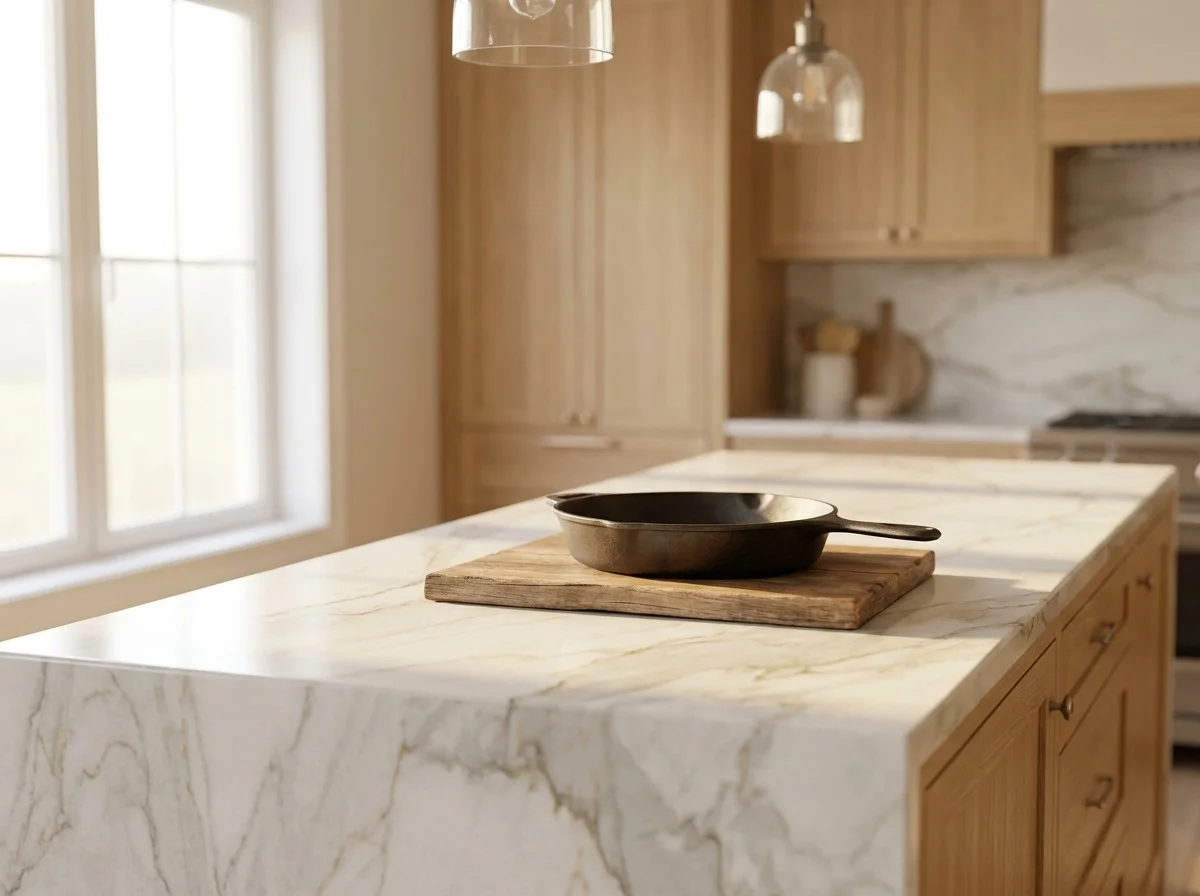
For most households, daily care decides the quartz vs quartzite question more than looks do. Both surfaces are durable, but they ask for different habits, and knowing those habits up front keeps either one looking good for years.
Heat
Quartz handles warm mugs and plates without trouble, but direct heat is another story. The same engineered stone reference notes that quartz is less heat resistant than most granite and marble, stays unaffected below about 150 °C (300 °F), and can be damaged by sudden temperature changes. A pan straight off a burner can exceed that and leave a scorch mark or discoloration in the resin.
Quartzite tolerates heat far better because there’s no resin to scorch, but even so, a trivet is a smart habit on both surfaces, since a sharp jump in temperature can stress any stone and hot cookware can mark the sealer on quartzite.
Stains and Sealing
Quartz needs no sealing, and everyday spills wipe away with mild soap and water. Quartzite does need periodic sealing, and the simplest way to check it is a water-drop test: if a few drops darken the stone within several minutes, it’s time to reseal. Spills like wine, oil and coffee are best wiped up promptly on either surface.
Sun and Outdoor Use
The resin in quartz isn’t fully UV stable, so long exposure to direct sun can discolor it over time, which rules it out for outdoor kitchens. Quartzite has no such limit, which makes it a strong choice for patios, outdoor bars and kitchens beside large south-facing windows.
| Care task | Quartz | Quartzite |
|---|---|---|
| Daily cleaning | Mild dish soap and warm water, soft cloth | pH-neutral stone cleaner or mild soap and water |
| Hot cookware | Always use a trivet or hot pad | Trivet advised, especially for very hot pans |
| Sealing | None | Periodic, when the water-drop test shows absorption |
| Cleaners to avoid | Harsh abrasives, oven cleaner, strong solvents | Acidic or harsh cleaners that wear down sealer |
| Sun exposure | Keep out of long direct sun | No special limits |
For more on keeping either surface in shape, see our stone care and warranty guidance before you choose cleaning products.
Quartz vs Quartzite Cost
Quartzite is usually the more expensive of the two, though the gap depends on the slab. Quartz pricing tends to sit in a narrower band because it’s manufactured to a set specification, while natural quartzite varies with rarity, quarry location and how dramatic the veining is. A common white quartz will typically cost less than a rare quartzite, while a premium designer quartz can overlap with an entry-level quartzite.
Several factors move the final installed price of either material, whichever one you choose:
- The slab itself, including color, rarity and the quarry or product line it comes from
- Slab thickness, since thicker slabs cost more to buy and handle
- Edge profile, with detailed edges adding fabrication time
- Layout complexity, including sink and cooktop cutouts, seams and vein matching
- Removal of old countertops and installation in your space
| Cost driver | Effect on quartz | Effect on quartzite |
|---|---|---|
| Slab selection | Narrow price range across most colors | Wide range; rare colors and bold veining cost more |
| Fabrication | Cuts predictably | Harder stone takes more time to cut and polish |
| Vein matching | Rarely needed | Often needed across seams on large islands |
| Sealing | No ongoing cost | Small ongoing cost for periodic resealing |
If you’re weighing a third option, our granite and quartz price comparison explains where granite usually falls between the two.
Should You Get Quartz or Quartzite?
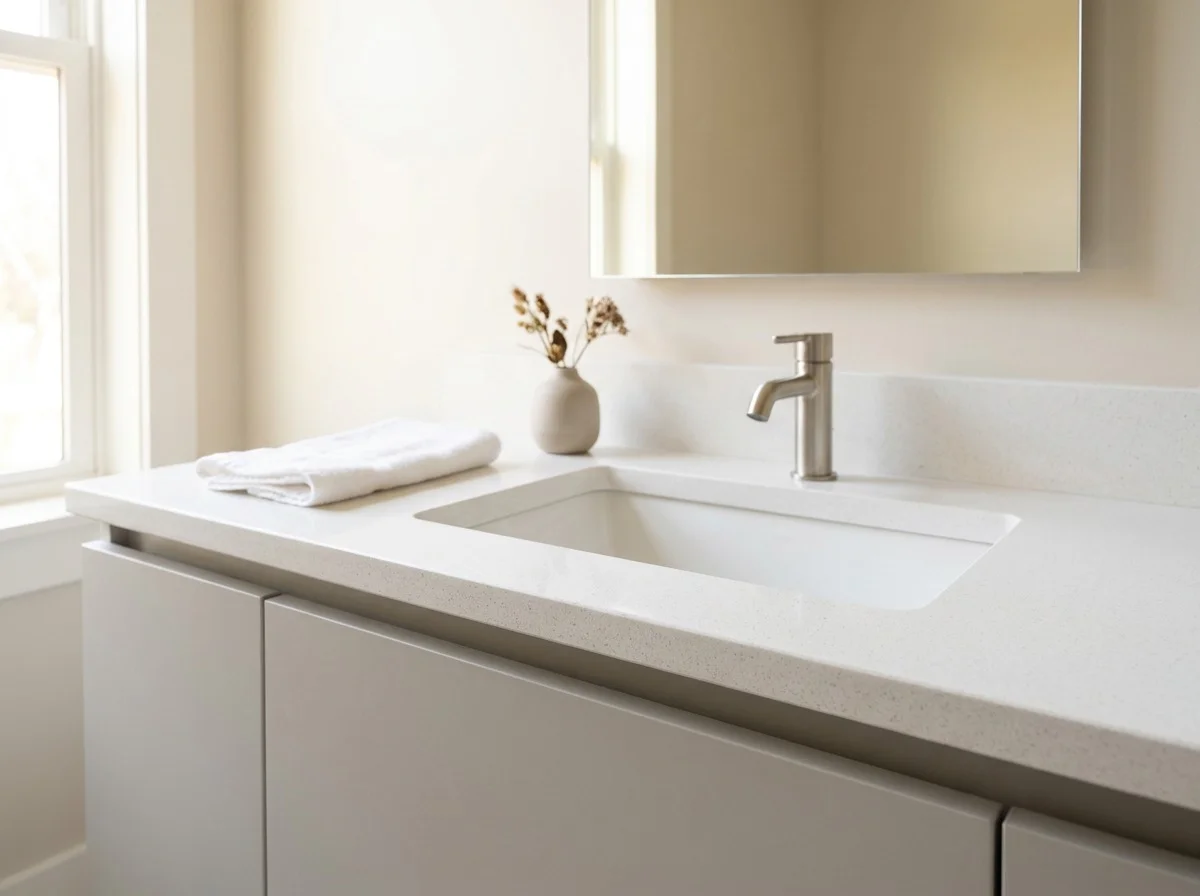
Neither stone is better across the board, so the right answer comes down to how you’ll use the space. A quick way to decide is to match the material to the daily demands of each space and the look you want.
- Busy family kitchen: Quartz is often the easier fit, with no sealing and a forgiving surface for spills, as long as everyone uses trivets.
- Showpiece island: Quartzite gives you veining no one else will have, and a large island is where that natural movement shows best.
- Bathroom vanity: Quartz works well here, since heat isn’t a concern and low upkeep matters in a space cleaned often.
- Outdoor kitchen or sunny space: Quartzite is the clear choice, because quartz resin can discolor in long sun.
- Rental or resale project: Quartz offers a consistent, clean look at a predictable cost.
Luxury homes use both materials, and the choice usually reflects taste rather than status. Some owners want the calm, uniform look of quartz, while others want a natural stone with depth and character. Whatever you lean toward, seeing full slabs in person matters more than any photo, so plan to pick out a slab in person before you decide.
How Granite and Marble Designs Helps You Choose
Choosing between quartz and quartzite is easier when one company guides you from slab selection through installation. Granite and Marble Designs works through the StoneDoneRight™ process, which starts with a personalized design consultation and carries through to installation in your space.
- Design consultation: A countertop design consultant walks you through quartz and quartzite options based on how you cook, clean and live, so the recommendation fits your home rather than a trend.
- Engineering and slab layout: Laser templating measures your cabinets and walls, then the layout plans where seams and veins fall, which matters most on quartzite islands.
- Precision fabrication: SABERjet CNC equipment cuts each slab to the planned layout, including sink and cooktop cutouts.
- Professional demolition: Your old countertops are removed with care, so the space is ready for installation.
- Installation and sealing: Installers set the countertops with near-imperceptible seams and seal natural stone like quartzite before handoff.
As a countertop contractor in Denver, CO with projects for 1,354+ homeowners and eight Parade of Homes awards earned between 2008 and 2020, the team can show you both materials side by side and explain the trade-offs plainly.
Key Takeaways
- Quartz is an engineered surface made mostly from crushed quartz bound with resin. Quartzite is a natural metamorphic stone quarried in solid slabs, so every piece is unique.
- Quartzite is harder than granite and handles heat and sun well. Quartz resin can scorch under hot pans and discolor in long direct sun, so it isn’t suited to outdoor kitchens.
- Quartz needs no sealing and cleans up with mild soap and water. Quartzite needs periodic sealing, which you can check with a simple water-drop test.
- Quartzite usually costs more than quartz, though prices overlap at the edges. Rarity, thickness, edge profile, layout and fabrication all move the final price.
- Quartz suits busy kitchens, bathrooms and rentals where consistency and low upkeep matter. Quartzite suits showpiece islands, outdoor kitchens and spaces where natural veining is the goal.
- Slab labels aren’t always reliable, so check the pattern, edges and origin. Seeing full slabs in person is the surest way to choose.
Frequently Asked Questions
Is Taj Mahal quartzite or quartz?
Taj Mahal is a natural quartzite, known for its soft cream base and warm gold and taupe veining. Many quartz makers sell look-alike designs inspired by it, so confirm whether a “Taj Mahal” sample is the natural stone or an engineered copy.
Can you put a hot pan or hot coffee on quartz or quartzite?
A hot coffee mug is fine on either surface, but a pan straight off the stove can scorch or discolor quartz resin, while quartzite handles heat far better. Use a trivet on both surfaces to protect the stone and the sealer.
Can you use Clorox wipes on quartz or quartzite?
Not for routine cleaning, because disinfecting wipes and harsh cleaners can dull the finish on quartz and wear down the sealer on quartzite over time. For daily care, use mild dish soap and warm water or a pH-neutral stone cleaner.
How can you tell quartz from quartzite?
Look at the whole slab, since quartz repeats a consistent pattern, while quartzite veining changes across the piece and shows natural crystalline depth. Ask for the slab’s origin, since quartzite comes from a quarry and quartz carries a manufacturer and product name.
Which is more durable, quartz or quartzite?
Quartzite is harder and handles heat and sun better, so it’s tougher in demanding spaces, while quartz resists stains without sealing and is easier day to day. The more durable choice depends on whether heat or upkeep matters more to you.
Is quartzite the same as quartz?
No, quartzite is a natural metamorphic stone formed from sandstone under heat and pressure, while quartz countertops are engineered from crushed quartz and resin. The similar names cause confusion, but the two behave differently in a kitchen.
Does quartzite need to be sealed?
Yes, quartzite is slightly porous, so it needs periodic sealing to keep resisting stains in a working kitchen. Try a water-drop test: if a few drops darken the stone within several minutes, it’s time to reseal.
Does quartzite stain?
It can if the sealer has worn off or a spill sits too long. Oil, wine and coffee are the usual culprits, and keeping the stone sealed while wiping spills promptly prevents most stains.
Is quartz or quartzite man-made?
Quartz countertops are man-made, manufactured from crushed quartz, resin and pigments, while quartzite is natural stone that is quarried and cut into slabs with nothing added.
Do luxury homes use quartz countertops?
Yes, luxury homes use both quartz and quartzite, and owners who want a clean, uniform look often choose quartz, while those who want one-of-a-kind veining choose quartzite. The deciding factor is usually style and upkeep, not price alone.
Conclusion
The difference between quartz and quartzite comes down to origin, because quartz is engineered for consistency and easy care, while quartzite is natural stone that brings hardness, heat tolerance and veining no other slab can match. Once you know how each one handles heat, stains, sealing and sun, the right choice usually becomes clear.
If you’re still torn on quartz vs quartzite, the most useful next step is to see both in full slabs and talk through how your space will be used. You can schedule a design consultation about quartz or quartzite and compare your options with a team that handles design, fabrication and installation.
Schedule a design consultation for your new countertops.
Visit our Denver showroom to compare full slabs.