
Soapstone, Limestone and Alternative Stone Countertops in Denver
Alternative stone countertops (soapstone, limestone, slate, travertine) fit specific Denver design intents that mainstream granite, quartz, and quartzite cannot deliver. Soapstone handles heavy kitchen use with distinctive matte tactility. Limestone reads historical and soft. Slate offers dark contemporary character. Travertine brings Mediterranean warmth. Each requires different maintenance and appears in specific applications.
Denver homeowners occasionally want a countertop with character that granite, quartz, and quartzite cannot deliver. The alternative stone category, soapstone, limestone, slate, and travertine, fills that gap for projects with specific design intent. These stones show up in farmhouse kitchens, historical restorations, contemporary industrial designs, and Mediterranean-style spaces where mainstream materials would fight the design language.
After 18 years of specifying alternative stones on Denver projects, one truth holds across the category: these materials require homeowners who understand what they are committing to. Softer, more porous, more character-forward, and higher maintenance than mainstream stones. The homeowners who choose them for the right reasons love them for decades. The homeowners who choose them expecting granite performance regret it within months.
What Makes Alternative Stones Different
Alternative stones share three characteristics that distinguish them from the mainstream category. Understanding these before specifying any of them prevents the most common form of disappointment.
Softness and porosity define the category. Alternative stones typically score Mohs hardness 2 to 5 compared to 6 to 8 for granite and quartzite. The lower hardness produces tactile warmth and character but also faster wear at high-use surfaces and higher porosity that demands more frequent sealing. Maintenance runs higher across the board: more frequent sealing, more careful cleaning product selection, and acceptance of patina development over time.
Distinctive character is the reason to specify any alternative stone. Each material has a specific visual and tactile identity that mainstream stones cannot replicate. If a homeowner could be satisfied with granite or quartzite performance, mainstream stones deliver better value. Alternative stones earn their place when the character matters more than the maintenance convenience.
Soapstone: The Tactile Workhorse
Soapstone is a metamorphic stone composed primarily of talc, giving it a soft tactile feel and matte natural finish. Unlike other alternative stones, soapstone handles heavy kitchen use surprisingly well, which makes it a popular choice for industrial-style and farmhouse kitchens where mainstream stone options do not fit the design.
Key soapstone characteristics:
- Tactile warmth. Mohs 2 to 3 produces a distinctive soft feel that no other stone matches.
- Heat resistance. Handles hot cookware directly, historically used for wood stove surrounds.
- Acid resistant. Does not etch from citrus, wine, or coffee (unlike marble and travertine).
- Develops patina. Darkens over time with use and mineral oil treatment, which is part of its character.
- Requires oiling rather than sealing. Food-grade mineral oil replaces chemical sealer.
Soapstone maintenance is unusual. Instead of periodic sealing with a chemical product, homeowners apply food-grade mineral oil to soapstone surfaces. The routine starts frequent (every 2 to 4 weeks) for the first 6 months to encourage even patina development, then drops to every 2 to 4 months as the patina sets. After 2 years, oiling 1 to 2 times per year is usually sufficient. Soapstone has been used for kitchen surfaces for centuries in Vermont and New England homes.
Pricing typically runs $90 to $200 per square foot installed in Denver, comparable to entry quartzite. Soapstone appears in farmhouse kitchens, industrial lofts, historical restorations, and any project where honest tactile character matters more than the polished consistency of engineered surfaces.
Limestone: The Soft Historical Material
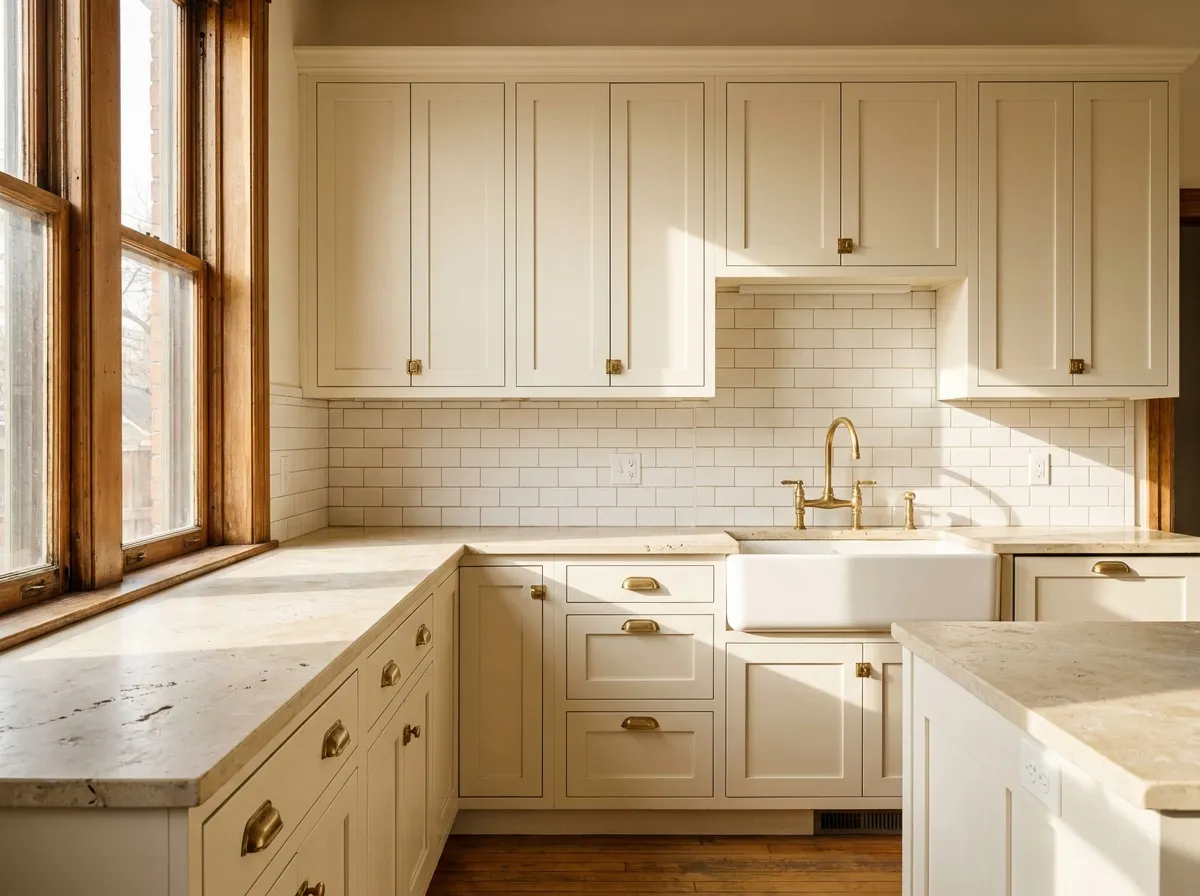
Limestone is a sedimentary stone used in historical European kitchens and country homes for centuries. It is the softest and most porous of the alternative stones covered here, which makes it the most demanding to maintain and the most authentic for period-correct projects.
Limestone characteristics that shape its use:
- Very soft. Mohs 2 to 3.5. Scratches and wears noticeably under heavy use.
- Highly porous. Requires frequent sealing (every 3 to 6 months for kitchen use).
- Pale natural color palette. Creams, light grays, soft beiges, occasionally with visible shell or fossil inclusions.
- Etches readily. Acidic spills produce visible dull marks within seconds.
- Historical authenticity. Sometimes the only period-correct material for restoration work.
Limestone is best specified for projects where authentic period character matters more than low maintenance. Historical Denver home restorations, country kitchen designs, bathroom vanities in Victorian-era properties, and specific design projects where the softness and patina are part of the intended aesthetic. Pricing typically runs $60 to $150 per square foot installed.
Homeowners who want low-maintenance kitchen surfaces should not specify limestone. Homeowners restoring a historical home or committed to period-correct character may find limestone is the only authentic material for the project.
Slate: The Dark Contemporary Alternative
Slate is a fine-grained metamorphic rock with dark colors (deep gray, green-gray, purple-gray, occasional black) and distinctive matte natural finish. It appears less frequently in Denver kitchens than soapstone or travertine but delivers a specific dark contemporary aesthetic that other alternative stones do not match.
Slate properties relevant to countertop use:
- Dark color palette. Deep grays, greens, and purples that read as sophisticated and contemporary.
- Natural cleft finish. The natural surface texture is subtle but distinctive.
- Mohs 3 to 4. Softer than granite but harder than limestone and soapstone.
- Low porosity for the alternative category. Requires sealing less frequently than limestone or travertine.
- Heat tolerant. Handles hot cookware without damage.
Slate appears in Denver kitchens designed with dark contemporary aesthetics, in mountain homes wanting a natural stone with regional character, and in commercial hospitality applications where the dark tactile surface reads sophisticated. Pricing runs $70 to $160 per square foot installed. The slate stone material page at the Denver showroom covers the specific varieties currently available.
Slate maintenance combines the best of the alternative category: less frequent sealing than limestone or travertine, heat tolerance similar to soapstone, and daily cleaning with standard pH-neutral stone products.
Travertine: The Mediterranean Warm Alternative
Travertine is a form of limestone formed by mineral spring deposits, recognizable by its characteristic natural pits and channels that give the surface its distinctive texture. Travertine reads warm, rustic, and Mediterranean, showing up in Tuscan-inspired kitchens, Spanish-style homes, and any project wanting old-world character.
Travertine characteristics:
- Natural pitting. Can be filled (smooth surface) or unfilled (rustic surface) during fabrication.
- Soft and porous. Mohs 3 to 4. Requires careful daily care.
- Warm color palette. Honey, ivory, walnut, and silver are the typical color families.
- Etches like marble. Acidic spills produce visible dull marks.
- Requires sealing every 6 to 12 months.
Travertine works best as perimeter counter in low-prep kitchens, on bathroom vanities (especially powder rooms), and as accent surfaces in great rooms where the rustic character is part of the design. The filled-versus-unfilled decision affects both aesthetic and cleanability: filled travertine reads smoother and cleans more easily; unfilled travertine reads more rustic but catches crumbs and requires more careful cleaning.
Pricing typically runs $50 to $120 per square foot installed. Travertine appears in Mediterranean-inspired Denver homes, in bathroom vanities where the warm honey palette works with brass fixtures, and in accent applications where the rustic character contributes to the overall design.
When Alternative Stones Are the Right Choice
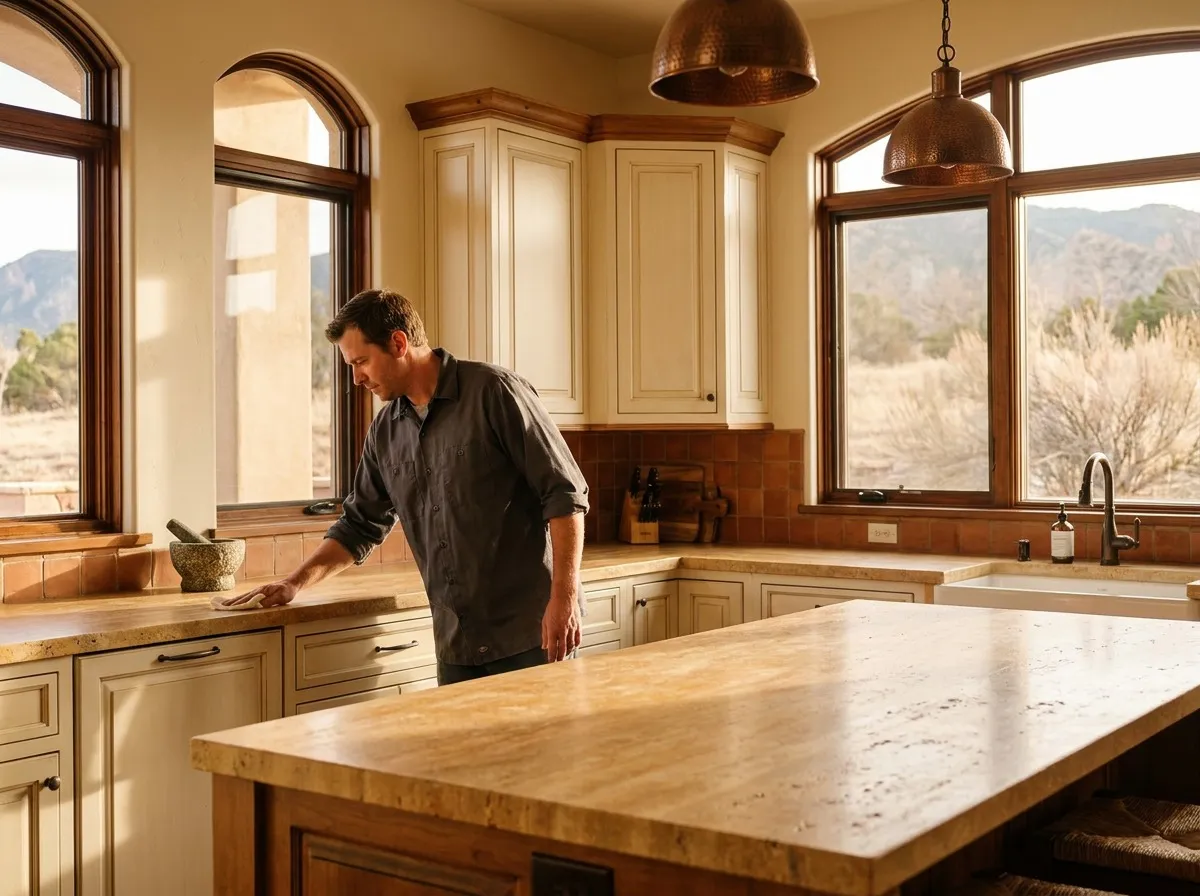
Alternative stones earn their specification when specific design or performance factors align with what they deliver:
- A specific design language calls for the material. Farmhouse for soapstone, historical for limestone, Mediterranean for travertine, dark contemporary for slate.
- The application is low-prep or accent. Bar tops, powder room vanities, fireplace surrounds, and accent surfaces work well; heavy-prep kitchens require more careful material selection.
- Homeowner accepts higher maintenance. More frequent sealing (or oiling for soapstone), immediate spill cleanup, careful cleaning product selection.
- Character matters more than consistency. Patina, wear patterns, and slab-to-slab variation are seen as features rather than flaws.
- Budget supports the specialty sourcing. Some alternative stones require import lead times that add to cost.
The homeowners who consistently love their alternative stone choices are those who understood what they were committing to before signing the contract. The homeowners who consistently regret them are those who chose based on appearance without understanding the maintenance reality.
Fabrication Considerations Across the Alternative Category
Alternative stone fabrication requires the same equipment as mainstream stone but with more careful handling because the materials are softer and more fragile. Stone design consulting at Granite and Marble Designs starts these projects with a detailed material discussion before any slab gets committed.
Several fabrication considerations apply across the category:
Edge profile choice matters more than on granite. Soft stones chip during ornate edge fabrication, so simpler profiles (eased, demi-bullnose) are recommended for soapstone, limestone, and travertine. Ornate profiles (ogee, double-ogee) risk chipping and rarely justify the fabrication difficulty on these materials.
Sourcing takes longer than mainstream materials. Alternative stones are not always in regional inventory. Soapstone often comes from Brazilian or Vermont sources. Limestone typically comes from Indiana, French, or Italian quarries. Travertine primarily from Italy or Turkey. Plan 4 to 8 weeks from slab selection to install on most alternative stone projects. Browse the full range of stone materials at the Denver showroom for current availability.
Sealing happens at the shop before transport and again at install. Alternative stones need protection from handling contamination before install. Both stages get scheduled into the fabrication timeline.
Key Takeaways
- Alternative stones (soapstone, limestone, slate, travertine) deliver distinctive character that mainstream stones cannot replicate.
- All four are softer and more porous than granite or quartzite, requiring more careful maintenance and acceptance of patina.
- Soapstone is the only alternative stone that handles heavy kitchen use well because it is heat-resistant and acid-resistant.
- Limestone is the most historical and most demanding; specify only for period-correct projects.
- Slate delivers dark contemporary aesthetics with better maintenance profile than limestone or travertine.
- Travertine brings Mediterranean warmth but etches like marble; best in low-prep applications.
Frequently Asked Questions
How do alternative stone prices compare to granite or quartzite?
Alternative stones span a wide range. Travertine and limestone typically run $50 to $150 per square foot installed, comparable to mid-range granite. Slate runs $70 to $160. Soapstone runs $90 to $200, comparable to entry quartzite. Cost depends on stone variety, slab origin, fabrication complexity, and Denver supplier availability.
Can alternative stones be used for a full kitchen or only as accent surfaces?
Soapstone handles full-kitchen use well because of its heat resistance and acid resistance. Travertine, limestone, and slate are better suited to accent surfaces or low-prep perimeter counters. Homeowners who want a full-kitchen install of travertine, limestone, or slate should plan for higher maintenance demands and accept patina development over time.
How often does soapstone need to be oiled?
Soapstone oiling is a long-term schedule. The first 3 to 6 months after install, oil every 2 to 4 weeks to encourage even patina. After the patina sets, oil every 2 to 4 months. After the first 2 years, oil 1 to 2 times per year is usually sufficient. Food-grade mineral oil is the recommended product.
Does travertine etch from acidic spills like marble?
Yes. Travertine is a form of limestone and reacts to acidic spills the same way marble does. Citrus, wine, coffee, vinegar, and tomato products all produce visible etch marks. Travertine in heavy-prep kitchens shows etching within months. Travertine in low-prep applications shows less obvious etching over years.
What is the difference between filled and unfilled travertine?
Filled travertine has its natural pits filled with epoxy or color-matched resin during fabrication, producing a smoother surface that cleans easier. Unfilled travertine retains its natural pitting as rustic character but catches crumbs and requires more careful cleaning. Most kitchen installs choose filled for cleanability; bathroom vanities sometimes choose unfilled for visual character.
Is limestone too soft for kitchen use in Denver?
Limestone works for kitchen use only when the homeowner accepts the maintenance reality. Frequent sealing, immediate spill cleanup, acceptance of visible wear and patina, and willingness to use cutting boards rather than the stone surface itself. Homeowners who want a low-maintenance kitchen should not specify limestone.
Can alternative stones be matched if a section needs replacement years later?
Difficult, often impossible. Natural alternative stones vary by quarry lot, and the slab cut for a project in 2026 may not have matching material available in 2036. Keeping a saved remnant of the original install is the only reliable way to ensure future matching capability.
Do alternative stones work for outdoor kitchens in Denver?
Generally no. Limestone and travertine weather poorly under UV and freeze-thaw. Slate tolerates outdoor conditions moderately but shows wear over years. Soapstone tolerates outdoor use better than the others but requires more sealing maintenance than granite or porcelain. For outdoor Denver projects, granite, porcelain, and dense quartzite are better choices.
How are alternative stones cleaned daily?
Warm water and a pH-neutral stone cleaner handle daily cleaning across all alternative stones. Avoid vinegar, citrus cleaners, ammonia, bleach, and anything labeled as all-purpose. For soapstone, the same daily routine plus periodic mineral oil treatments. For onyx, travertine, and limestone, the same daily routine plus careful spill cleanup.
Which alternative stone works best for a Denver farmhouse kitchen?
Soapstone is the strongest fit for farmhouse and industrial-style Denver kitchens. The matte tactile finish and heat/acid resistance match the honest working-kitchen aesthetic these designs favor. Slate is a secondary choice for darker farmhouse variations. Travertine and limestone work in kitchens with more explicitly historical or Mediterranean design language.
Next Step
Alternative stone projects start with a design conversation about intent and maintenance tolerance before slab selection begins. The right stone depends on how the homeowner will actually use and care for the surface.
Author
Elliot Nunes Lead Design Consultant and Senior Stone Specialist Granite and Marble Designs, Denver, CO 80221
Elliot Nunes has specified alternative stones on Denver projects ranging from historical Victorian restorations to modern industrial lofts to farmhouse kitchens. His approach matches stone to design intent first, then walks through the maintenance reality before any slab gets committed.