
Natural Stone vs Engineered Stone: Understanding the Key Differences
Natural stone is quarried in slab form from the earth (granite, marble, quartzite, onyx). Engineered stone is manufactured from ground quartz aggregate bound with resin (branded as Caesarstone, Silestone, Cambria). Natural stone offers unique veining, heat resistance, and 30 to 50 year lifespan with sealing. Engineered stone offers consistency, zero-maintenance non-porous surfaces, and manufacturer warranty.
Most Denver countertop projects come down to a single fork in the road: natural stone or engineered stone. The two categories look similar in a showroom lineup but perform very differently over decades of use. Understanding the differences before choosing prevents the most common form of homeowner regret, which is specifying one material expecting the properties of the other.
After 18 years of Denver fabrication, both categories have earned their place in the market. Natural stone works when unique character and heat tolerance matter. Engineered stone works when consistency and low maintenance matter. Neither is better in the abstract. The right choice depends on the specific project, the design intent, and how the homeowner will actually use the surface.
What Natural Stone Actually Is
Natural stone countertops are cut from slabs quarried from the earth. Every slab represents a specific geological history: granite formed from cooling magma over millions of years, marble metamorphosed from limestone under heat and pressure, quartzite transformed from sandstone through similar processes, and onyx precipitated in caves and hot springs over centuries.
The category includes granite, marble, quartzite, onyx, soapstone, limestone, travertine, and slate. Each has distinct properties defined by its mineral composition and formation process. The full range of natural stone materials at the Denver showroom rotates with slab yard inventory, so what is available in any given month varies.
Natural stone characteristics that appear across the category:
- Unique per slab. No two slabs of any natural stone are identical because they represent different sections of the earth.
- Porous to varying degrees. All natural stones require sealing at install and periodic resealing during service life.
- Heat tolerant. The stone itself tolerates hot cookware without damage, though sealers benefit from trivets.
- 30 to 50 year lifespan. Natural stone properly installed and maintained lasts decades and can be refinished if it dulls.
- Higher slab-to-slab price variation. A specific granite variety can range from mid-range to premium depending on rarity and origin.
What Engineered Stone Actually Is
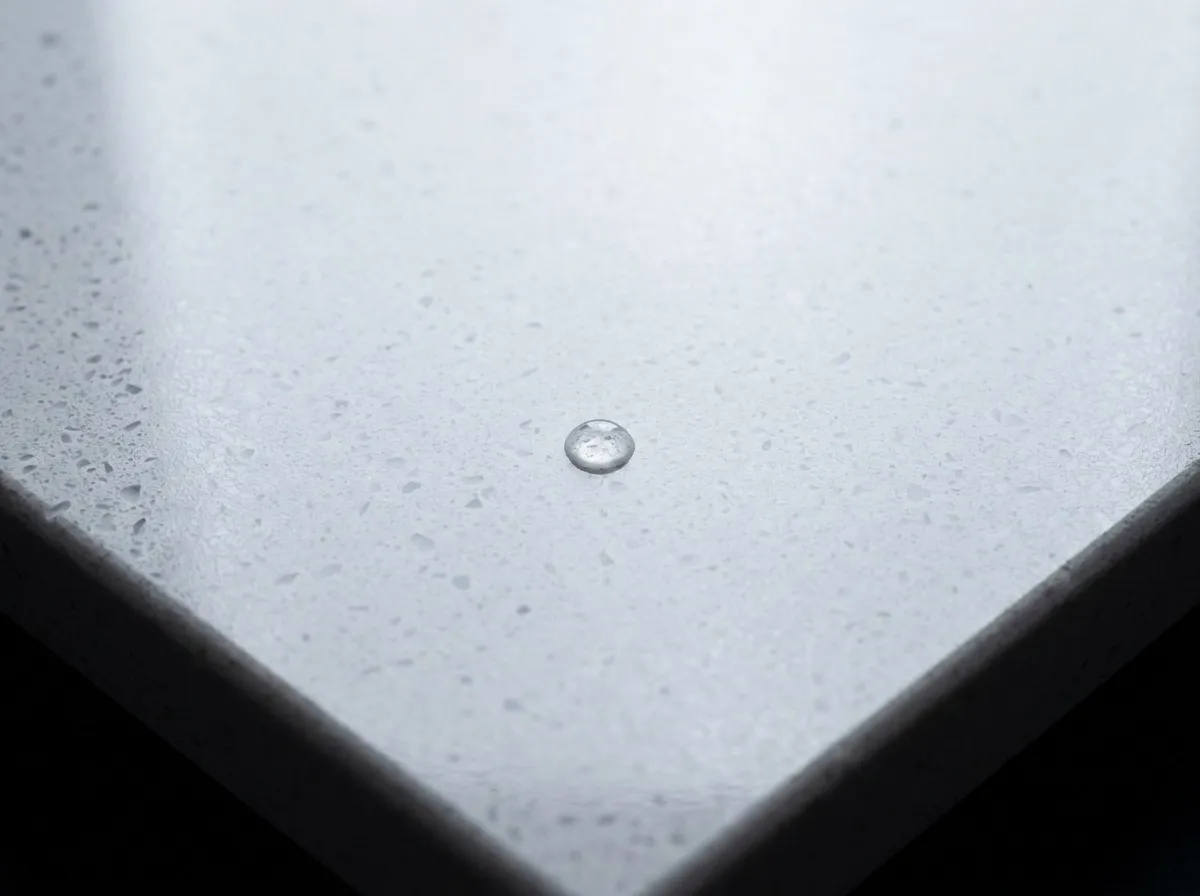
Engineered stone is manufactured by combining ground natural quartz crystals with polymer resins, pigments, and sometimes recycled glass or metal aggregate. The mixture gets pressed under high pressure and heat into slab form, then finished with polishing or honing. The result is a non-porous manufactured material that mimics natural stone aesthetics while delivering engineered performance.
The category is dominated by branded manufacturers: Caesarstone, Silestone, Cambria, MSI Q, Hanstone, and others. Each brand produces hundreds of patterns spanning marble looks, granite looks, concrete looks, metal looks, and solid colors. The material is often marketed as “quartz” (short for engineered quartz), which creates confusion with natural quartzite.
Engineered stone characteristics that appear across the category:
- Consistent per slab. Every slab of a given color is identical because the material is manufactured, not quarried.
- Non-porous. No sealing required at install or after because the resin binder fills any space between quartz particles.
- Heat sensitive. Direct contact with very hot cookware can permanently scorch the resin binder.
- 20 to 30 year lifespan. Shorter than natural stone because the resin binder can yellow over decades and the surface cannot be refinished.
- Predictable pricing. Every slab of a given color from a given manufacturer costs the same.
The Aesthetics Comparison: Character vs Consistency
The visual difference between natural and engineered stone comes down to one word: variation. Natural stone shows the geological history of the specific slab. Engineered stone shows the manufacturer’s pattern design applied consistently across every slab.
Both approaches have design merit for different situations. Natural stone works when the homeowner wants a unique surface no one else has, wants dramatic veining that reads differently from every angle, or wants the connection to a real geological material. Engineered stone works when the homeowner wants a specific look reliably reproduced across multiple counter sections, wants no visible slab-to-slab variation, or wants a pattern that natural stone cannot produce (concrete looks, metal looks, uniform veined patterns).
The realism of engineered stone patterns has improved substantially over the past decade. Premium European engineered quartz brands (Neolith, Dekton) now produce marble-look patterns that pass for natural marble at normal viewing distance. Budget engineered quartz reads more clearly as a printed surface. Examining the specific slab in person, not the manufacturer’s brochure photo, is essential for evaluating pattern quality.
The Performance Comparison: Heat, Etch, and Maintenance
Performance differences between the categories show up in three specific areas: heat tolerance, acid etching, and maintenance schedule.
Heat tolerance favors natural stone. Granite, quartzite, and soapstone all handle direct contact with hot cookware from the burner or oven without damage. Engineered stone requires trivets because direct heat can scorch the resin binder, producing permanent dark marks. For homeowners who set hot cast iron directly on the counter without thinking, natural stone is more forgiving.
Acid etching is category-dependent. Granite and quartzite (natural) resist acid etching well because they contain little calcium carbonate. Marble (natural) etches readily from citrus, wine, and coffee. Engineered stone does not etch because the resin binder is not acid-reactive. For a kitchen with heavy citrus prep, quartzite, granite, or engineered stone all work; marble does not.
Maintenance schedule favors engineered stone. Natural stone requires sealing every 6 months to 3 years depending on variety. Engineered stone never needs sealing. For homeowners who prioritize low maintenance, engineered stone eliminates the sealing schedule entirely. Stone design consulting at Granite and Marble Designs matches the material to the homeowner’s maintenance tolerance during the design phase.
The Cost Comparison: Range vs Predictability
Pricing differences show up more in variability than in typical mid-range cost. Mid-range natural stone (granite, mid-tier quartzite) and mid-range engineered stone both run $50 to $130 per square foot installed in Denver. The differences appear at the extremes.
Natural stone spans a wider price range. Entry-level granite runs $40 to $60 per square foot installed. Premium quartzite and exotic granites can run $200 to $300 per square foot. Rare marbles and specialty stones can exceed $300 per square foot. The pricing reflects real slab rarity and sourcing difficulty.
Engineered stone is more predictable. Basic solid-color quartz runs $60 to $80 per square foot installed. Premium veined patterns run $130 to $200 per square foot. The upper end of engineered stone (Cambria’s premium collections, Dekton, some Neolith patterns) can reach $250 per square foot. Every slab of a given color costs the same, which simplifies budget planning.
For large projects with multiple counter sections, engineered stone’s consistency means slabs from different orders match perfectly. Natural stone requires ordering all needed slabs from the same quarry lot at the same time to ensure color and pattern consistency across the project.
Outdoor Use: Where the Categories Diverge Sharply
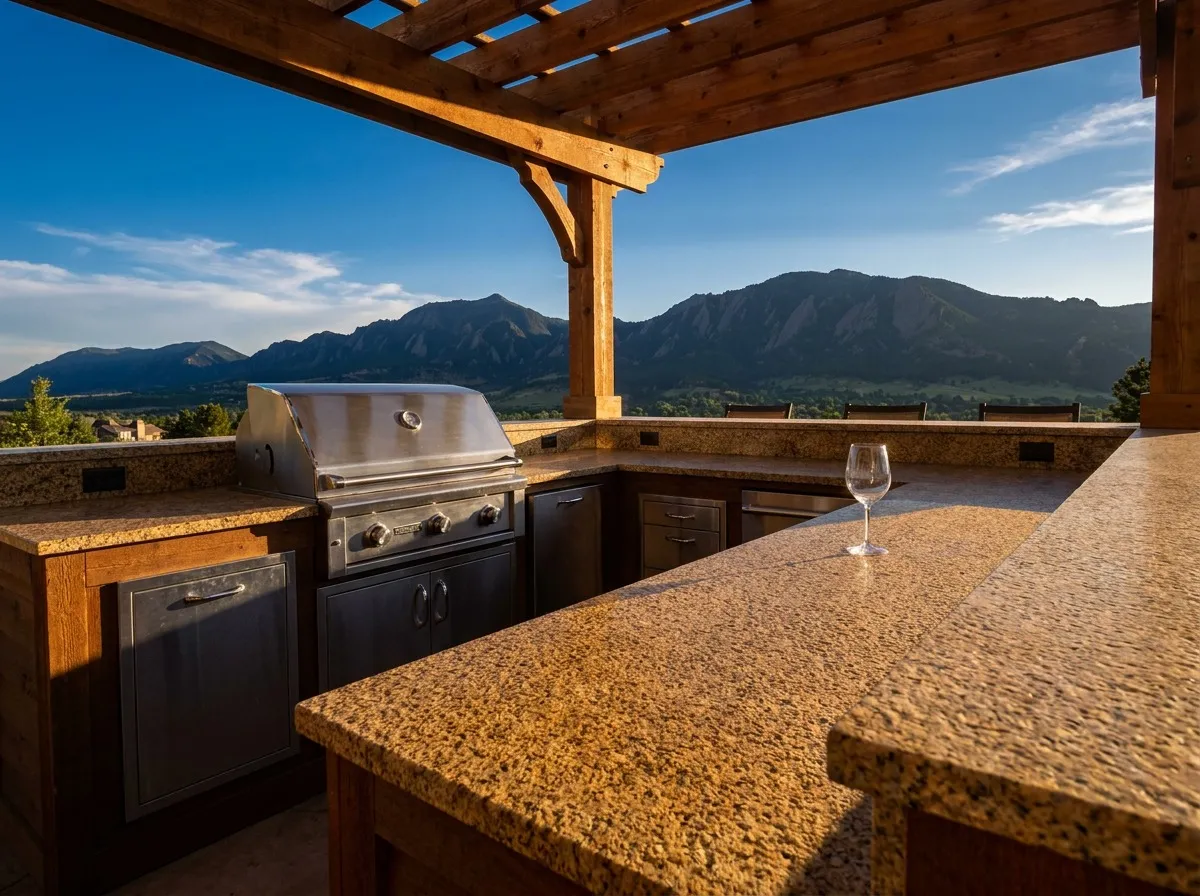
Outdoor kitchen applications create the sharpest divergence between natural and engineered stone. Natural granite, quartzite, and porcelain (a related engineered category) all perform well outdoors in Colorado conditions. Engineered quartz fails outdoors within 3 to 7 years because UV exposure degrades the resin binder, causing yellowing, fading, and eventual structural failure.
Most engineered quartz manufacturers void warranties completely for outdoor use. This makes the outdoor selection question straightforward: natural stone (particularly granite and quartzite) or porcelain slab for outdoor Denver projects. Engineered quartz belongs indoors.
For homeowners who want indoor-outdoor design continuity (same stone visible from inside through windows to outdoor cooking area), this pushes the decision toward natural stone or porcelain for the whole project. Quartzite works for both indoor and outdoor use with the same slab family, delivering the visual continuity engineered quartz cannot.
When Natural Stone Is the Right Choice
Natural stone earns the specification when specific design or performance factors matter more than the maintenance convenience of engineered options:
- Unique character matters. The homeowner wants a surface no one else has, with veining and pattern that cannot be reproduced.
- Heat tolerance matters. Frequent cooking with hot cookware makes the trivet requirement of engineered stone impractical.
- Outdoor use is planned. Natural granite, quartzite, or porcelain are the outdoor-rated choices.
- Long service life is a priority. Natural stone lasts 30 to 50 years and can be refinished; engineered stone lasts 20 to 30 years and cannot.
- Design authenticity is part of the project. Historical homes, custom architectural work, and premium residential projects often want authentic stone.
When Engineered Stone Is the Right Choice
Engineered stone earns the specification when consistency, maintenance, or specific pattern availability matters:
- Consistent color across many surfaces. Large kitchens, commercial projects, and multi-unit residential where every counter must match.
- Zero-maintenance requirement. The homeowner wants no sealing schedule and no porosity concerns.
- Specific pattern only available in engineered. Concrete looks, brushed metal looks, and some marble looks that natural stone does not reproduce.
- Family kitchen with heavy fingerprint concern. Some engineered stone patterns hide fingerprints better than polished natural stone.
- Manufacturer warranty is important. Engineered stone comes with 10 to 25 year material warranties from major brands.
Key Takeaways
- Natural stone is quarried from the earth; engineered stone is manufactured from quartz aggregate bound with resin.
- Natural stone offers unique character, heat tolerance, and 30 to 50 year lifespan; engineered stone offers consistency, non-porous surface, and 20 to 30 year lifespan.
- Both categories run $50 to $130 per square foot installed in the mid-range; natural stone spans a wider price range at the extremes.
- Natural stone requires sealing at install and periodic resealing; engineered stone never needs sealing.
- Engineered stone is heat sensitive and not recommended for outdoor use; natural granite, quartzite, and porcelain work outdoors.
- The right choice depends on design intent, use pattern, and maintenance tolerance rather than which category is universally better.
Frequently Asked Questions
Which category is more expensive, natural or engineered stone?
Mid-range costs are similar (roughly $50 to $130 per square foot installed for both). Natural stone spans a wider price range: entry granite runs $40 to $60 and premium quartzite or exotic stone can exceed $300. Engineered stone is more predictable, with basic patterns at $60 to $80 and premium veined patterns at $130 to $200. Total project cost depends more on which stone is specified than which category.
Does engineered stone look artificial compared to natural stone?
Depends on pattern quality and viewing distance. Premium engineered quartz (Neolith, Dekton, Cambria’s higher collections) produces marble-look patterns that pass for natural at normal viewing distance. Budget engineered patterns read more clearly as printed surfaces up close. Examining the specific slab in person, not the brochure photo, is essential.
Which category is easier to maintain?
Engineered stone is easier because it never requires sealing. Natural stone needs sealing at install and periodic resealing (every 6 months to 3 years depending on variety). Daily cleaning is similar for both categories: warm water and a pH-neutral stone cleaner. The maintenance difference comes down to the periodic sealing schedule.
Can either category go outdoors in Denver?
Natural granite and quartzite work outdoors. Porcelain (a related engineered category) works outdoors. Engineered quartz does not work outdoors because UV exposure degrades the resin binder over 3 to 7 years. Marble and other soft natural stones weather too quickly for Colorado outdoor conditions.
Which is more heat resistant?
Natural stone. Granite, quartzite, and soapstone all handle hot cookware directly from the burner without damage. Engineered quartz can scorch permanently from very hot cookware because the resin binder is heat sensitive. Trivets are mandatory on engineered stone; optional but recommended on natural stone.
Does natural stone have durability advantages over engineered stone?
Yes, over long time horizons. Natural stone typically lasts 30 to 50 years and can be refinished if it dulls. Engineered stone typically lasts 20 to 30 years and cannot be refinished; if it dulls or yellows, replacement is the only option. For homeowners planning a 20+ year timeline, natural stone wins on longevity.
Which category has better warranty terms?
Different structures. Engineered stone comes with 10 to 25 year manufacturer warranties on the material itself. Natural stone comes with fabrication and install warranties from the fabricator (typically 1 to 5 years) but no manufacturer warranty on the material because the material is from the earth. Both categories are covered comparably by the fabricator’s install warranty.
Is natural stone bookmatching possible with engineered stone?
Engineered stone can be sold in matching pairs from the same production run, but true bookmatching (where sequential slabs mirror each other) is a natural stone technique. Engineered stone patterns are printed, so any two slabs of the same pattern look similar but do not mirror. The dramatic feature-wall bookmatching that shows up in premium kitchens uses natural stone.
Which category ages better?
Natural stone develops patina over time (soapstone darkens, marble develops a soft matina, granite maintains original appearance). Engineered stone stays visually consistent for 15 to 20 years, then gradually shows resin yellowing that cannot be corrected. Homeowners who value patina development choose natural; those who want static consistency choose engineered.
Can natural and engineered stone be used together in the same kitchen?
Yes, and it is a common Denver design choice. Natural stone (dramatic quartzite or marble) on the island as a feature surface, engineered quartz on the perimeter counters as workhorse surfaces. The combination uses each material where its strengths matter most. Coordination requires attention to color and pattern to make the combination read intentional rather than mismatched.
Next Step
Natural and engineered stone both have their place in Denver kitchens. Choosing between them starts with the design intent, the use pattern, and the maintenance tolerance rather than assuming one category is universally better.
Author
Elliot Nunes Lead Design Consultant and Senior Stone Specialist Granite and Marble Designs, Denver, CO 80221
Elliot Nunes has specified both natural and engineered stone on hundreds of Denver kitchens over 18 years. His approach matches material category to the specific project rather than defaulting to one side of the natural-versus-engineered debate. The full stone materials lineup at the Denver showroom includes both categories side by side.