
6 Kitchen Countertop Design Ideas for Denver Homes
Kitchen countertop design ideas for Denver homes span waterfall islands, dramatic bookmatched slabs, mixed-material layouts, statement backsplashes, and edge profiles that match the home’s architecture. The strongest designs pair a material’s performance with the home’s style, whether craftsman, modern mountain, or contemporary, so the kitchen looks intentional and works for daily life.
A kitchen countertop is the largest continuous surface in most homes and the visual anchor of the room, so its design does more than any single element to set the kitchen’s character. Denver homes span a wide range of architectural styles, and the countertop designs that look best are the ones that respond to the home’s existing language rather than fighting it.
The ideas that follow work across Denver’s common home styles, from craftsman bungalows and modern mountain builds to sleek contemporary infills. Each idea pairs a design move with the practical considerations behind it, because a countertop has to look good and also function for years of cooking and gathering. A Denver custom stone supplier can help translate these ideas into a plan that fits the home.
Idea 1: The Waterfall Island
A waterfall island, where the countertop material continues vertically down the sides to the floor, is one of the most striking design moves available. It turns the island into a sculptural centerpiece and showcases the material’s pattern on a large vertical plane.
Waterfall islands work especially well with dramatic materials: a bold quartzite, a book-matched marble-look quartz, or a granite with strong movement. The vertical panels let the veining flow from the horizontal surface down the sides, which reads as intentional and high-end. The design suits contemporary and modern mountain kitchens particularly well, where clean lines and material drama are central to the aesthetic. Skilled countertop installation is essential here, because the mitered corners where the horizontal and vertical planes meet must align the veining and hold a tight seam.
Idea 2: Bookmatched Statement Slabs
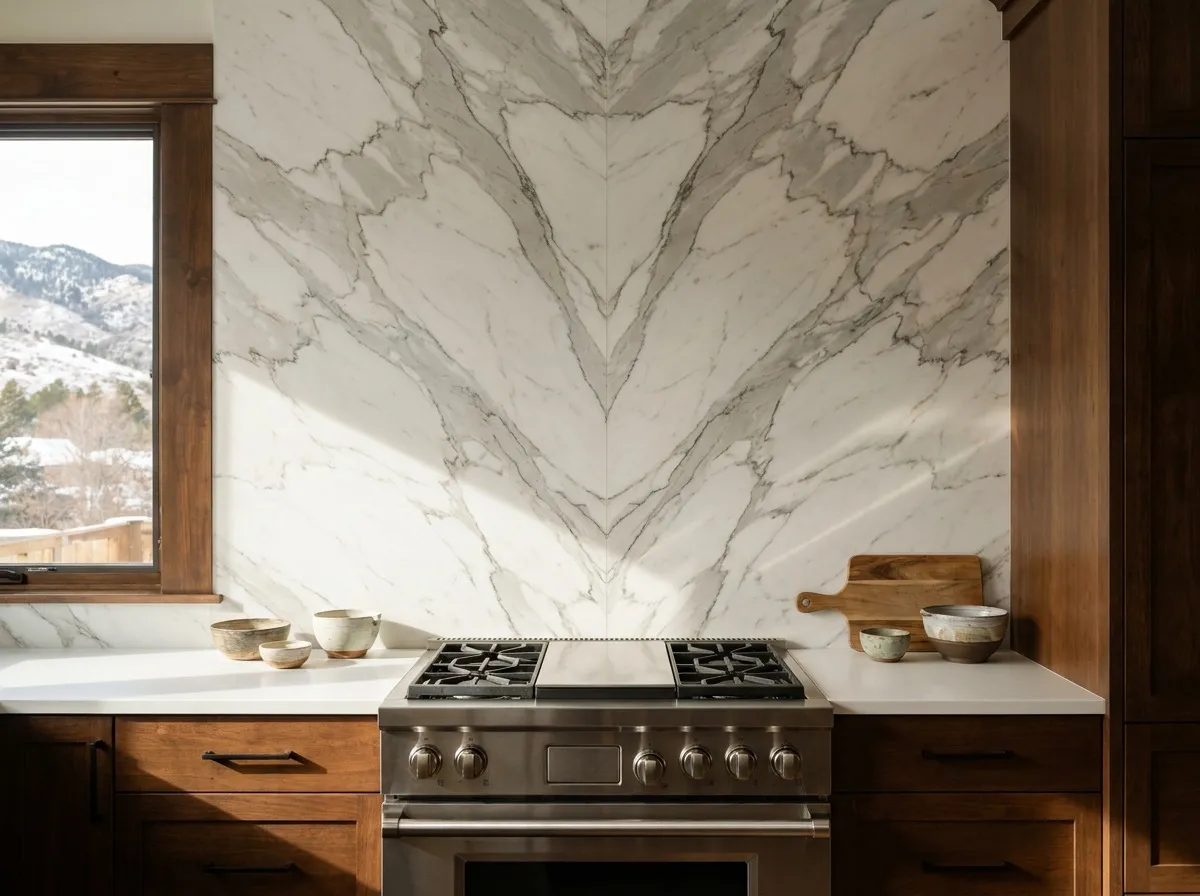
Bookmatching arranges two adjacent slabs so their veining mirrors across a central seam, creating a symmetrical, almost architectural pattern. On an island or a backsplash, a bookmatched pair becomes the focal point of the entire kitchen.
This design move is most dramatic with strongly veined materials like Calacatta-look quartz, marble, or dramatic quartzite. The symmetry draws the eye and gives the kitchen a custom, gallery-like quality. Bookmatching requires careful slab selection and precise fabrication, since the mirror effect only works when the two pieces are cut and joined to align the veining exactly. For homeowners who want one unforgettable feature, a bookmatched island or a floor-to-ceiling bookmatched backsplash delivers it.
Idea 3: Mixed-Material Layouts
Using two different countertop materials in one kitchen is both a design strategy and a practical one. A common approach pairs a hard-working perimeter material with a showpiece island, letting each surface play to its strengths.
- Durable perimeter, dramatic island. A quartz or granite perimeter handles daily cooking while a marble or quartzite island serves as the visual centerpiece.
- Warm and cool contrast. A warm-toned island against cooler perimeter counters, or vice versa, adds depth.
- Function zones. A butcher-block or soapstone prep zone alongside stone counters for specific tasks.
Mixed-material layouts suit transitional and contemporary Denver kitchens where a designed, collected look is the goal. The key is intentional contrast: the two materials should clearly relate through color, tone, or veining so the combination reads as a deliberate choice rather than a compromise. Comparing options across the full range of quartz countertops makes it easier to find a perimeter surface that complements a natural stone island.
Idea 4: Matching Countertops to Architectural Style
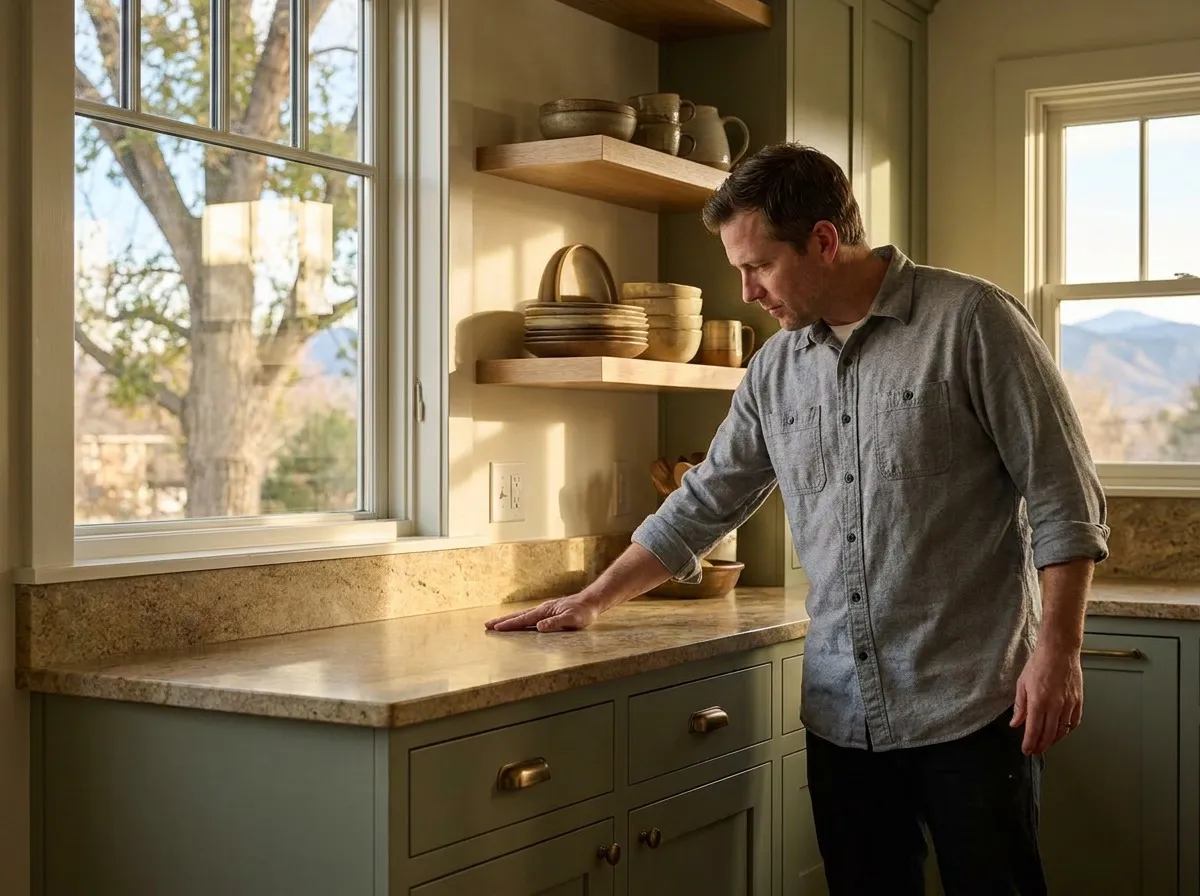
The most satisfying kitchen designs respond to the home’s architecture. Denver’s housing stock rewards this attention because its styles are distinct.
- Craftsman and bungalow. Warm granites, honed finishes, and soapstone suit the era’s emphasis on natural materials and handcraft. Simpler edge profiles fit the period.
- Modern mountain. Dramatic quartzite, leathered granite, and bold veining echo the surrounding landscape and pair well with wood and metal accents.
- Contemporary and modern infill. Clean white or gray quartz, waterfall edges, and minimal seams support the architecture’s emphasis on line and surface.
- Transitional. Versatile mid-tone stones and classic edge profiles bridge traditional and modern elements.
Matching the countertop to the architecture makes the whole kitchen feel considered. A dramatic contemporary quartz in a craftsman bungalow can feel out of place, while a warm honed granite in the same room feels inevitable. The style of the home is the best guide to the countertop that will still look right in ten years.
Idea 5: Edge Profiles as a Design Detail
The edge profile is a small detail with an outsized effect on the kitchen’s character. The right edge reinforces the design; the wrong one undercuts it.
Thin, squared eased edges read modern and suit contemporary kitchens. Thicker mitered edges create a substantial, luxurious look popular in high-end contemporary and modern mountain designs. Softer bullnose and ogee edges bring a traditional warmth that suits craftsman and transitional homes. The edge should match the design language of the rest of the kitchen: a delicate ogee edge on an otherwise minimalist contemporary island sends a mixed message, while a clean eased edge on the same island reinforces the aesthetic.
Idea 6: Backsplashes That Extend the Stone
Running the countertop material up the wall as a full-height backsplash is a design move that has grown from occasional to popular, and for good reason. A stone backsplash behind the range or across the whole wall creates a seamless, dramatic surface and eliminates the grout lines of tile.
This works beautifully with veined materials, where the pattern continues from counter to wall, and it is especially striking when paired with a bookmatched arrangement. A full-height stone backsplash suits contemporary and modern mountain kitchens and gives even a modest kitchen a custom, high-end feel. It also simplifies cleaning, since a continuous stone surface has no grout to scrub. For homeowners deciding where to spend, a statement backsplash often delivers more visual impact per dollar than upgrading the counter material alone. The Kitchen{:target=”_blank”} has evolved into the social center of the home, and a continuous stone surface reinforces that role by making the space feel unified and intentional.
Bringing the Ideas Together
The strongest kitchen designs rarely use every idea at once. They choose one or two focal moves (a waterfall bookmatched island, or a full-height statement backsplash) and let the rest of the kitchen support them with restraint. A kitchen that tries to make every surface a statement ends up with no focal point at all.
The starting question is always the same: what is the one thing this kitchen should be remembered for? Answering that identifies where to spend the design budget and where to keep things simple. From there, matching the material’s performance to the household’s cooking habits ensures the beautiful kitchen also works for daily life.
Key Takeaways
- Waterfall islands turn the island into a sculptural centerpiece and suit dramatic materials in contemporary and modern mountain kitchens.
- Bookmatched statement slabs create mirrored symmetry that becomes the focal point of the kitchen.
- Mixed-material layouts pair a durable perimeter with a showpiece island so each surface plays to its strengths.
- Matching the countertop to the home’s architecture, craftsman, modern mountain, contemporary, or transitional, makes the kitchen feel intentional.
- Edge profiles are a small detail with outsized effect and should reinforce the kitchen’s design language.
- Full-height stone backsplashes create a seamless dramatic surface and often deliver strong visual impact per dollar.
Frequently Asked Questions
What countertop design works best for a small Denver kitchen?
In a small kitchen, a light-colored quartz or subtly veined stone with minimal seams keeps the space feeling open and larger. A single continuous material rather than mixed materials reduces visual clutter. A waterfall edge on a small island adds drama without adding footprint. Keeping the backsplash and counter in the same or closely related material creates a unified surface that makes a compact kitchen feel intentional rather than cramped.
Are waterfall islands worth the extra cost?
For the right kitchen, yes. A waterfall island adds material and fabrication cost because the vertical panels require extra slab and precise mitered corners, but it delivers significant visual impact and a high-end, custom look. It is most worth it with a dramatic material whose veining benefits from the vertical display. In a contemporary or modern mountain kitchen where the island is the centerpiece, the waterfall often defines the whole room.
How do I choose a countertop that matches my home’s style?
Start with the home’s architecture. Craftsman and bungalow homes suit warm granites, honed finishes, and soapstone with simpler edges. Modern mountain homes pair well with dramatic quartzite and leathered granite. Contemporary homes favor clean white or gray quartz with waterfall edges. Transitional homes work with versatile mid-tone stones. Choosing a countertop that echoes the architecture makes the kitchen feel considered and helps it stay stylish over time.
Can I mix two countertop materials in one kitchen?
Yes, and it is a popular design strategy. The most common approach pairs a durable perimeter material like quartz or granite with a dramatic island in marble or quartzite, letting each surface play to its strengths. The key is intentional contrast: the two materials should relate through color or tone so the combination reads as a deliberate design choice. Mixed materials suit transitional and contemporary kitchens especially well.
Is a full-height stone backsplash better than tile?
It depends on the look you want. A full-height stone backsplash creates a seamless, dramatic surface with no grout lines, extends a veined material from counter to wall, and is easier to clean. Tile offers more pattern and color options at a lower cost and suits traditional and eclectic designs. For a contemporary or modern mountain kitchen aiming for a unified, high-end feel, a stone backsplash usually wins.
What edge profile is most popular right now?
Clean, squared eased edges and thicker mitered edges are both popular in current design. Eased edges suit minimalist contemporary kitchens, while mitered edges create a substantial, luxurious look for high-end contemporary and modern mountain designs. Softer bullnose and ogee edges remain the right choice for craftsman and traditional homes. The best edge is the one that matches the rest of the kitchen’s design language rather than the trendiest one.
Which countertop color makes a kitchen look bigger?
Lighter countertop colors, especially whites and soft grays, reflect more light and make a kitchen feel larger and more open. A light counter paired with light cabinetry maximizes the effect. Subtle, low-contrast veining reads as calm and expansive, while busy, high-contrast patterns can make a small space feel busier. In a large kitchen, darker or more dramatic stones work well because there is room for the visual weight.
How do I make my island the focal point?
Several design moves make an island the star: a waterfall edge that showcases the material vertically, a bookmatched slab with mirrored veining, a contrasting material against the perimeter counters, or a dramatic stone with strong movement. Pendant lighting and seating overhangs reinforce the island as a gathering point. The key is to let the island be the statement and keep the surrounding counters simpler so the eye knows where to land.
Should the countertop match or contrast the cabinets?
Both approaches work; the choice depends on the mood. Matching or closely relating the countertop and cabinet tones creates a calm, unified, spacious feel. Contrasting them, such as a dark island counter against light cabinets or a dramatic stone against simple cabinetry, creates energy and a focal point. Transitional and contemporary Denver kitchens often use a mix: unified perimeter counters and cabinets with a contrasting statement island.
What countertop design stays timeless?
Timeless kitchen countertop designs favor natural or natural-look materials in restrained colors, simple to moderate edge profiles, and choices that match the home’s architecture rather than chasing trends. A honed granite or a subtly veined quartz with a clean edge tends to look right for decades. The most dated kitchens are usually those built around a single trendy element, so anchoring the design in the home’s style keeps it enduring.
Next Step
Great kitchen countertop design starts with matching a focal idea to the home’s architecture and the household’s habits. The next step is seeing materials in person and planning the layout with a specialist.
Author
Elliot Nunes Lead Design Consultant and Senior Stone Specialist Granite and Marble Designs, Denver, CO 80221
Elliot Nunes leads design consultation at Granite and Marble Designs in Denver, where 18 years of fabrication have shown which kitchen designs still look right years later. The kitchens that respond to the home’s architecture and choose one or two focal moves almost always age better than those that try to make every surface a statement.