
How Every Countertop Material Actually Performs
Countertop materials differ measurably in hardness, heat resistance, scratch resistance, porosity, maintenance, and cost. Quartz leads on low maintenance, granite on heat tolerance, quartzite on hardness, and marble on visual prestige. Matching the material’s performance profile to how a household actually uses its kitchen is the key to a satisfying choice.
Choosing a countertop material is easier when the decision is grounded in performance data instead of showroom impressions. Every stone type has a measurable profile across hardness, heat resistance, scratch resistance, porosity, and maintenance, and those numbers predict how the surface will behave over years of real use.
This comparison lays out how the major materials perform against each other so a homeowner can match a surface to the way the household actually cooks and lives. A busy family kitchen has different priorities than a display kitchen used mainly for entertaining, and the right material follows from those priorities.
The Performance Dimensions That Matter
Before comparing materials, it helps to define what is being measured. Six dimensions capture almost everything that matters for daily use.
- Hardness. Resistance to scratching and abrasion, often referenced against the Mohs scale of mineral hardness{:target=”_blank”}.
- Heat resistance. How the surface tolerates hot cookware placed directly on it.
- Scratch resistance. Everyday resistance to knives, cookware, and abrasion.
- Porosity. How much the material absorbs liquids, which drives staining and sealing needs.
- Maintenance. Sealing frequency and daily care demands.
- Cost. Where the material typically falls on the price ladder.
No single material wins every dimension. The best choice is the one whose strengths align with how the household uses the kitchen and whose weaknesses fall on dimensions that household does not stress.
Quartz: The Low-Maintenance Standard
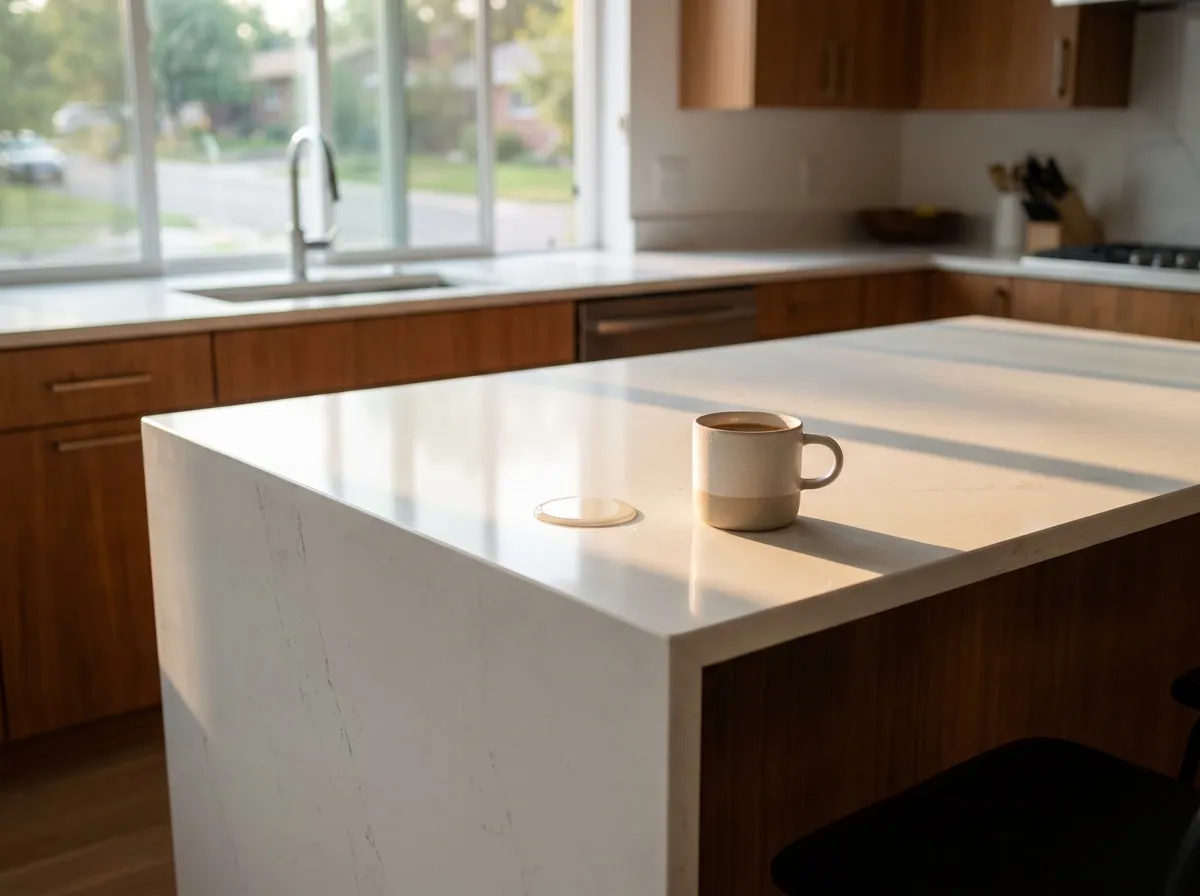
Engineered quartz is manufactured from ground natural quartz bound with resin, which gives it a consistent, non-porous surface. Its performance profile explains why it dominates new residential installations.
Quartz is non-porous, so it never needs sealing and resists staining from wine, coffee, and oils without any homeowner effort. It is hard and scratch-resistant for normal kitchen use. Its main weakness is heat: the resin binder can scorch or discolor if a hot pan is placed directly on the surface, so trivets are required. Quartz also offers the widest range of consistent patterns, including convincing marble looks, because it is manufactured rather than quarried. For households that want a surface they never have to think about, quartz is usually the answer. The full range of quartz countertops spans solid colors, speckled patterns, and dramatic veined designs.
Granite: The Heat-Tolerant Workhorse
Granite is a natural igneous stone, hard and heat-tolerant, with the geological character that many homeowners prize. Its profile makes it a strong choice for serious cooks.
Granite handles heat better than quartz because it is entirely natural stone with no resin binder, so a hot pan set directly on it will not scorch the surface (though using trivets is still wise for other reasons). It is very hard and scratch-resistant. Its main maintenance demand is sealing: because granite is porous to varying degrees, it needs periodic sealing to resist stains, typically once a year depending on the specific stone and sealer. Each granite slab is unique, which appeals to homeowners who want a one-of-a-kind surface. Comparing granite countertops slab by slab is the best way to find the color and movement that suits a kitchen.
Quartzite: The Hardest Natural Option
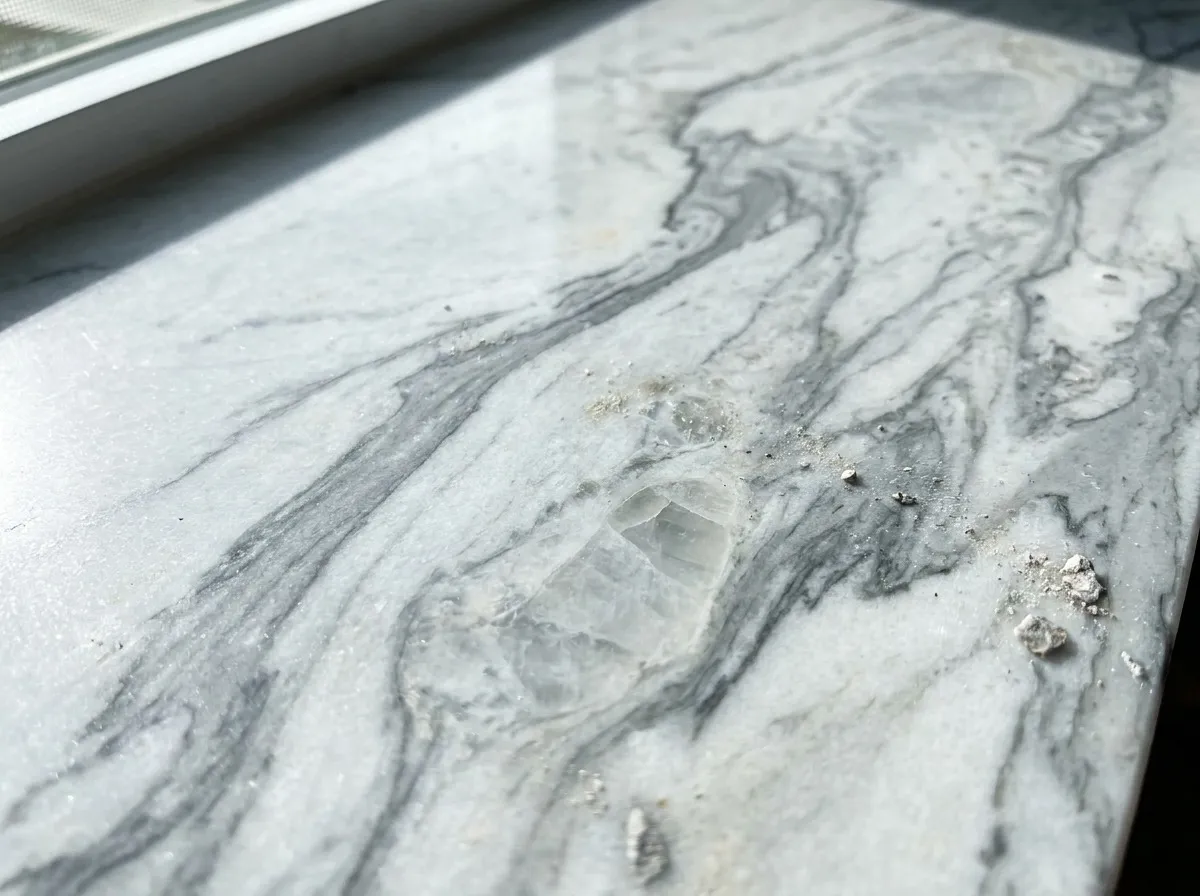
Quartzite is a natural metamorphic stone, often confused with quartz but entirely different. It is prized for exceptional hardness and marble-like looks without marble’s fragility.
Quartzite is one of the hardest countertop materials, more scratch-resistant than granite and far more so than marble. It tolerates heat well as a natural stone. Many quartzites offer dramatic white-and-gray veining that resembles marble, giving homeowners the coveted marble aesthetic with much greater durability. Like granite, it is porous and needs sealing. Because quartzite is harder to fabricate, it typically costs more than granite, placing it in the premium tier. For homeowners who want marble looks in a hard-working kitchen, quartzite is the performance answer.
Marble: Prestige With Care Requirements
Marble is a natural metamorphic stone valued above all for its appearance: the soft, luminous veining that has signified luxury for centuries. Its performance profile requires an honest conversation about care.
Marble is softer than granite and quartzite, so it scratches and etches more easily. It is also more porous and reactive to acids, meaning lemon juice, wine, or vinegar can etch a dull mark into a polished surface. Marble tolerates heat well as a natural stone. Its maintenance demands are the highest of the common materials: regular sealing and prompt cleanup of acidic spills. Many marble owners embrace the patina that develops over time as part of the material’s character. Marble is best for homeowners who love the look and accept the care, or for lower-traffic applications like a bathroom vanity or a baking station.
Porcelain and Specialty Stones
Beyond the four headliners, several other materials serve specific needs. Porcelain is an ultra-durable manufactured surface that resists heat, scratches, UV fading, and stains, making it excellent for outdoor use and high-traffic applications. Soapstone is a soft, non-porous natural stone with a warm matte character that never needs sealing but scratches and develops patina. Slate, travertine, and limestone each bring distinct looks with their own care profiles. The broader countertop materials landscape gives homeowners options well beyond the four most common stones, and a full-service Denver stone installation company can source and fabricate any of them.
Matching Material to Household
The comparison data only becomes useful when applied to a specific household. A few common profiles illustrate the matching process.
- The busy family kitchen that wants zero maintenance and can live with using trivets favors quartz.
- The serious cook who sets hot pans down constantly and wants natural character favors granite.
- The homeowner who wants marble looks but needs real durability favors quartzite.
- The design purist who loves marble and accepts the care, or who uses the space lightly, chooses marble.
- The outdoor kitchen or high-UV application favors porcelain or granite.
The wrong choice is usually a mismatch between the material’s weakness and the household’s habits: marble in a heavy-use family kitchen with young children, or quartz beside a stove where hot pans land without trivets. Matching the profile to the habits prevents the disappointment that comes from expecting a material to do something its physics do not support.
Key Takeaways
- Six dimensions define countertop performance: hardness, heat resistance, scratch resistance, porosity, maintenance, and cost.
- Quartz is non-porous and maintenance-free but can scorch from direct heat, so trivets are required.
- Granite is heat-tolerant and hard but porous, needing periodic sealing.
- Quartzite is the hardest natural option and offers marble looks with far greater durability, at a premium price.
- Marble delivers unmatched visual prestige but is softer, etches with acids, and demands the most care.
- The right material matches its strengths to how the household actually uses the kitchen and puts its weaknesses on dimensions that household does not stress.
Frequently Asked Questions
What is the most durable countertop material?
Quartzite is the hardest and most scratch-resistant natural stone, while porcelain is the most all-around durable manufactured surface, resisting heat, scratches, UV, and stains. Quartz is very durable for everyday use but vulnerable to direct heat. Granite is highly durable and heat-tolerant but porous. The most durable choice depends on which failure mode matters most to the household, since no single material leads every dimension.
Which countertop material handles heat best?
Natural stones like granite and quartzite handle direct heat best because they have no resin binder to scorch. Porcelain is also highly heat-resistant. Engineered quartz is the most heat-sensitive of the common materials because its resin binder can discolor or crack under a hot pan, so trivets are essential with quartz. For a cook who frequently sets hot cookware down, natural stone or porcelain is the safer choice.
Is quartz or granite better for a kitchen?
Neither is universally better; they excel at different things. Quartz wins on maintenance because it never needs sealing and resists stains effortlessly. Granite wins on heat tolerance and offers unique natural character. A household that prioritizes a worry-free surface leans quartz, while a serious cook who values heat resistance and one-of-a-kind stone leans granite. The right answer follows from the household’s priorities.
Does quartzite really resist scratches better than granite?
Yes. Quartzite is generally harder than granite on the Mohs scale, making it more scratch-resistant. This is one reason quartzite commands a premium: it delivers marble-like beauty with hardness that exceeds granite. Homeowners who want a dramatic veined surface that also stands up to heavy use often find quartzite the best performance match, accepting the higher cost and the sealing requirement it shares with granite.
Why does marble etch and how can I prevent it?
Marble etches because it is calcium-based and reacts chemically with acids like lemon juice, vinegar, and wine, which dissolve a tiny amount of the surface and leave a dull mark. Etching is different from staining and cannot be fully prevented on polished marble, only minimized by sealing, wiping acidic spills immediately, and choosing a honed finish that hides etching better. Many owners accept light etching as part of marble’s character.
How often does each material need sealing?
Quartz and porcelain never need sealing because they are non-porous. Granite and quartzite typically need sealing about once a year, though the exact interval depends on the specific stone and sealer. Marble needs sealing more frequently because it is more porous and reactive. Soapstone needs no sealing but is often treated with mineral oil to even its patina. A simple water-drop test shows when natural stone is due for resealing.
Which countertop material is best for a busy family?
Quartz is usually the best fit for a busy family kitchen because it is non-porous, never needs sealing, resists stains from everyday spills, and stands up to normal use with minimal care. The one habit to build is using trivets under hot cookware. For families that also cook at high heat frequently, granite is a strong alternative that trades some maintenance for better heat tolerance.
Is porcelain a good countertop material?
Porcelain is an excellent countertop material for specific needs. It is highly resistant to heat, scratches, UV fading, and stains, making it particularly strong for outdoor kitchens and high-traffic surfaces. It comes in large-format slabs with realistic stone looks. Its main considerations are that it is thinner than natural stone and requires skilled fabrication because it can chip if mishandled. For durability-first applications, it is a top contender.
How much do the materials differ in cost?
Cost tiers roughly track from entry-level quartz and builder-grade granite at the affordable end, through mid-grade granite and premium quartz in the middle, up to quartzite, exotic granite, and marble at the premium end. Within each material, the specific slab drives the price, so a rare granite can cost more than a standard quartzite. The material category sets a baseline, but slab selection determines the final number.
Can I mix materials in one kitchen?
Yes, and it is a common design strategy. Many kitchens pair a durable quartz or granite perimeter with a marble or quartzite island as a focal point, or use a hard-working material at the cooking zone and a showpiece stone where appearance matters most. Mixing materials lets a homeowner put each surface’s strengths where they count and reserve higher-care materials for lower-traffic zones.
Next Step
A material comparison turns a showroom full of options into a shortlist that fits the household. The next step is seeing the shortlisted materials in person and matching a specific slab to the kitchen.
Author
Elliot Nunes Lead Design Consultant and Senior Stone Specialist Granite and Marble Designs, Denver, CO 80221
Elliot Nunes leads design consultation at Granite and Marble Designs in Denver, where 18 years of fabrication have shown how each material performs over years of real use. The homeowners who match a material’s strengths to their own habits almost always stay happy with the choice, while mismatches are the most common source of countertop regret.