
Granite vs Quartz Countertops: Which Is Right for You?
Granite is a natural stone with unique patterns, excellent heat resistance, and outdoor suitability that requires annual sealing. Quartz is an engineered surface with consistent color, zero maintenance, and non-porous stain protection that can’t handle direct heat or outdoor UV exposure. Neither is universally better — the right choice depends on how you cook, how you maintain your home, and where the countertop is going.
This is one of the most common questions GMD hears at their Denver showroom: should I go with granite or quartz? Both are excellent materials. Both last decades. And both have real strengths and genuine limitations that national comparison articles tend to gloss over — especially when it comes to how these materials perform specifically in Denver’s dry, high-altitude climate. For a deeper dive into all countertop material options, see our complete countertop materials guide for Denver homes.
How Do Granite and Quartz Compare on the Factors That Actually Matter?
The five factors that matter most — heat resistance, maintenance, visual character, durability, and outdoor suitability — split clearly between the two materials. Granite wins on heat tolerance, uniqueness, and outdoor use. Quartz wins on maintenance, consistency, and stain protection. Understanding these tradeoffs narrows your decision quickly.
Let’s skip the vague language and compare them directly.
Heat Resistance
Granite handles heat. You can set a hot pan directly on granite without scorching, discoloring, or damaging the surface. Is using a trivet still smart? Yes — extreme thermal shock can theoretically stress any stone near edges. But granite’s tolerance for kitchen heat is genuinely excellent.
Quartz is more vulnerable. The polymer resin binders that hold quartz together can discolor, crack, or warp under sudden extreme heat. A scorching pan from the oven, a hot curling iron in the bathroom — these can leave permanent marks on quartz. Trivets and heat pads are mandatory, not optional.
Maintenance
Quartz wins here without debate. It’s non-porous, never needs sealing, resists stains without any treatment, and cleans with soap and water. There’s essentially nothing you need to do beyond wiping it down.
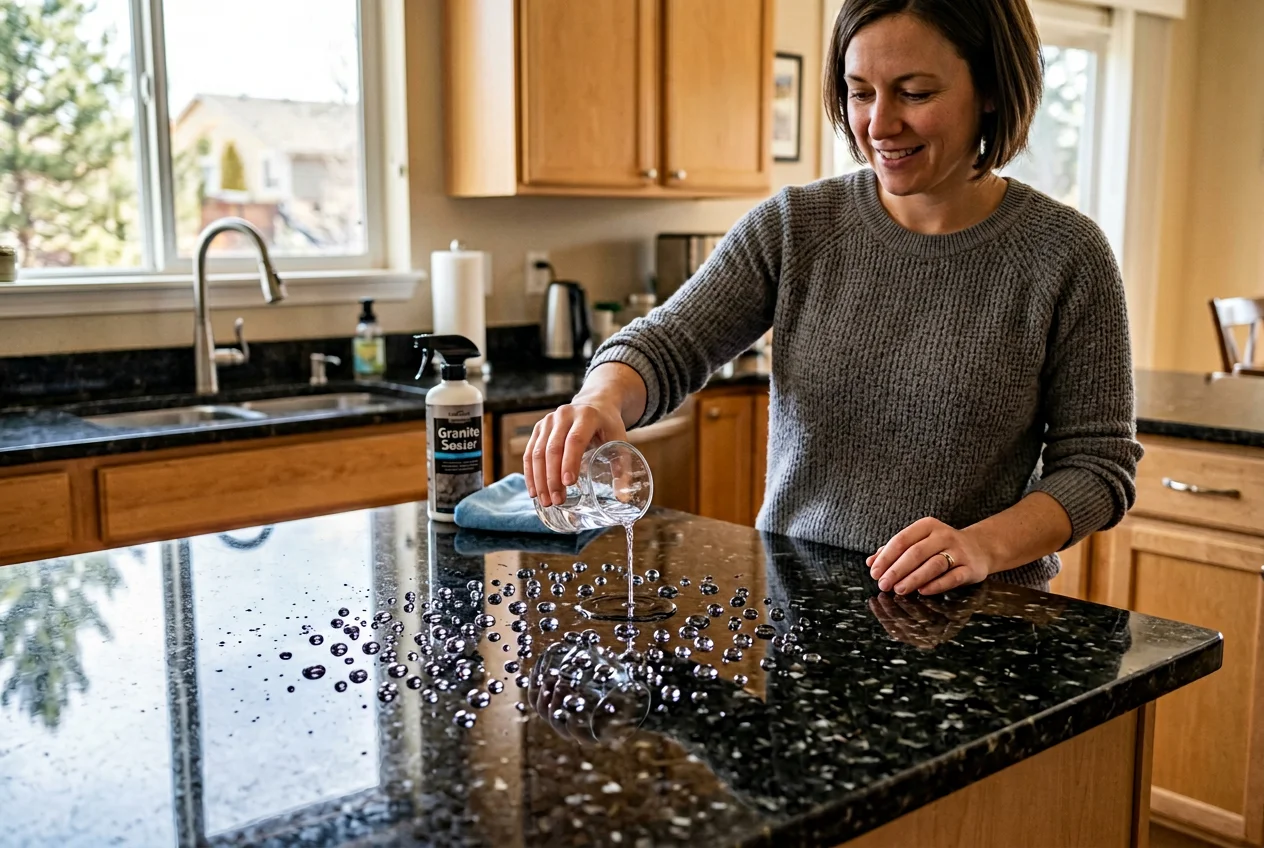
Granite requires sealing — typically every 12 months in Denver’s dry climate (the low humidity causes sealers to evaporate slightly faster than in humid regions). A sealed granite surface resists stains well, but an unsealed one absorbs liquids quickly. It’s not difficult maintenance, but it is maintenance.
Visual Character
Every granite slab is unique. The mineral formations, veining, color shifts, and crystal structures are natural and unrepeatable. Two slabs of “the same” granite from the same quarry will look different. That uniqueness is either the entire appeal or a drawback, depending on your design preference.
Quartz delivers consistency. Order the same color from the same brand, and you’ll get a predictable result. The newest quartz patterns convincingly mimic marble and natural stone veining, though up close the depth and dimensionality of real stone isn’t replicated.
| Factor | Granite | Quartz | Winner |
| Heat resistance | Excellent — handles hot pans | Poor — resin scorches | Granite |
| Maintenance | Annual sealing required | Zero maintenance | Quartz |
| Visual uniqueness | Every slab one-of-a-kind | Consistent, repeatable | Depends on preference |
| Stain resistance (sealed) | Very good | Excellent (non-porous) | Quartz (slight edge) |
| Scratch resistance | Very good (Mohs 6–7) | Very good (Mohs 7) | Tie |
| Outdoor suitability | Yes (with outdoor sealing) | No (UV degrades resin) | Granite |
| Repairability | Chips fillable with epoxy | Limited repair options | Granite |
| UV stability | Unaffected | Yellows over time | Granite |
Which Material Fits Your Lifestyle Better in Denver?
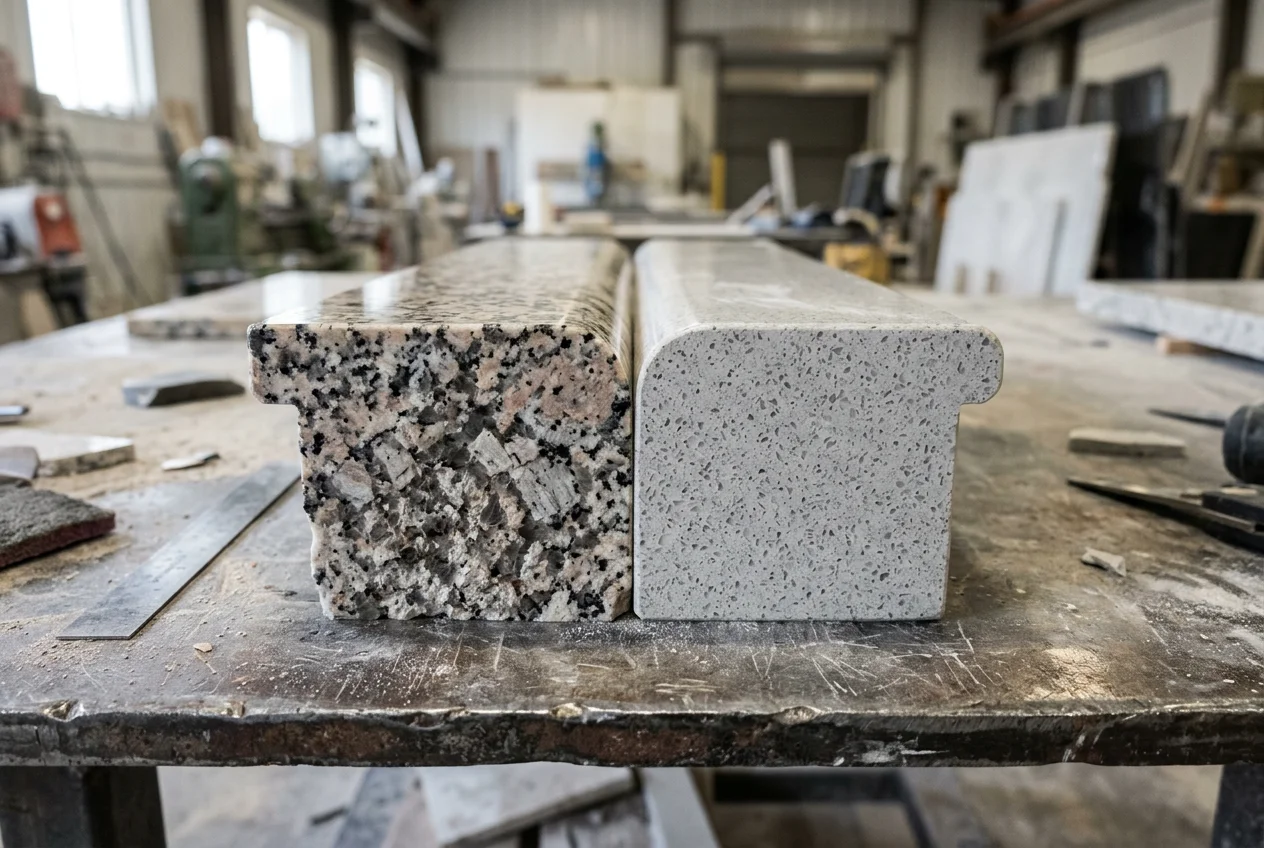
Choose granite if you cook heavily with hot pans, want an outdoor kitchen, prefer one-of-a-kind natural patterns, or don’t mind spending 20 minutes once a year on sealing. Choose quartz if you want truly zero maintenance, prefer consistent colors, don’t use your countertops near extreme heat, and plan to use them strictly indoors.
Here’s how to think about it practically:
You’re probably a granite person if:
- You cook daily and regularly move hot cookware around the kitchen
- You’re building an outdoor kitchen or bar area in your Denver backyard
- You love the idea that no one else has the exact same countertop as you
- You’re comfortable with a simple annual sealing routine
- You appreciate natural stone’s depth and three-dimensional mineral patterns
You’re probably a quartz person if:
- You want to wipe your counters and never think about maintenance again
- You prefer a specific color that matches your design plan exactly
- Your kitchen doesn’t involve extreme heat exposure
- You value consistency across a large surface or multi-room project
- You’re choosing countertops for a rental property or resale-focused renovation
And here’s the Denver-specific angle: If your kitchen has south-facing windows that pour direct sunlight across the countertops, granite is the safer long-term choice. Quartz resin can gradually yellow under sustained UV exposure. Denver sits at 5,280 feet with 300+ days of sunshine — that’s significantly more UV than most U.S. cities. It’s a detail that matters here and gets overlooked in national comparison articles.
Can You Use Both Granite and Quartz in the Same Home?
Absolutely. Many Denver homeowners install granite in the kitchen — where heat tolerance and natural beauty matter most — and quartz in bathrooms where zero maintenance and moisture resistance are more important. Using different materials in different rooms lets you optimize each surface for its specific environment.
This isn’t an either/or decision for the whole house. The kitchen, master bath, guest bath, and laundry room each have different demands. Mixing materials is a practical strategy that GMD recommends often.
A common combination: exotic granite on the kitchen island (the showpiece), quartz on the kitchen perimeter (easy maintenance near the sink), and quartz or marble in the bathrooms. Each surface is optimized for its location.
The key to making mixed materials work across a home is coordinating color tones. At GMD’s Denver showroom, the design team helps clients compare granite and quartz options side by side to ensure everything flows visually even when the materials differ room to room.
The Bottom Line: Let Your Lifestyle Decide, Not Marketing
Both granite and quartz are excellent countertop materials that last decades in Denver homes. The “better” material is whichever one matches how you actually live — not which one a salesperson is trying to move this month. Visit a showroom, see both materials in person, ask questions about maintenance and performance, and make the decision that fits your home.
GMD works with both materials daily and has no incentive to push one over the other. Their team’s job is to help you choose the surface that matches your kitchen, your habits, and your design goals — then fabricate and install it with the same StoneDoneRight™ precision regardless of material.
Ready to compare granite and quartz in person? Contact Granite & Marble Designs for a free consultation at their Denver showroom, where you can see full slabs of both materials, compare finishes and edge profiles, and get honest guidance from a team that’s helped over 4,400 Denver homeowners make this exact decision.
Frequently Asked Questions
Is granite or quartz more durable?
Both are highly durable. Granite scores 6-7 on the Mohs hardness scale; quartz scores 7. Quartz resists stains slightly better due to its non-porous surface. Granite handles heat significantly better.
Does granite really need to be sealed every year?
In Denver’s dry climate, yes — annual sealing is recommended. The low humidity causes sealers to evaporate faster. A simple water-drop test tells you if your sealer is still effective.
Can quartz countertops go in an outdoor kitchen?
No. UV exposure degrades the resin binders in quartz, causing discoloration and structural weakening. Use granite or porcelain for outdoor countertops in Denver.
Which is more expensive — granite or quartz?
Price ranges overlap significantly. Standard granite and standard quartz are similarly priced. Exotic granite costs more than premium quartz, while budget granite remnants can cost less than entry-level quartz.
Do quartz countertops look fake?
Modern premium quartz — especially from Cambria and Caesarstone — closely mimics natural stone veining. Up close, the pattern lacks the three-dimensional mineral depth of real stone, but from normal viewing distance the appearance is convincing.
Can granite chips be repaired?
Yes. Small granite chips are filled with color-matched epoxy and polished to blend with the surrounding surface. It’s a straightforward repair that most stone fabricators offer.
Does granite harbor bacteria?
Sealed granite is safe for food preparation. The sealer fills micro-pores that could otherwise trap bacteria. Unsealed granite is more porous, which is why annual sealing matters.
Will my granite countertop look different from the showroom sample?
Possibly. Every granite slab is unique, and a small sample can’t capture the full slab’s pattern variation. That’s why GMD recommends selecting your specific slab in person rather than ordering from a sample.
Which material is better for resale value?
Both granite and quartz are considered premium countertop materials that support strong resale value. Neither significantly outperforms the other in buyer preference.
Can GMD help me decide between granite and quartz?
Yes. GMD’s design consultants work with both materials daily and provide unbiased guidance based on your specific kitchen, lifestyle, and design goals — not inventory-driven recommendations.