
Complete Guide to Countertop Materials for Denver Homes
Choosing the right countertop material comes down to three things: how you use your kitchen, what look you want, and how much maintenance you’re willing to do. Granite, quartz, marble, quartzite, and porcelain each handle heat, staining, and daily wear differently — and Colorado’s dry climate adds another factor most national guides ignore.
If you’re comparing countertop materials for a Denver home, you’ve probably noticed that every website seems to say something different. One blog calls granite “outdated.” Another claims quartz is “indestructible.” Neither is true. As a natural stone supplier serving Denver since 2007, Granite & Marble Designs has helped over 4,400 homeowners, contractors, and commercial clients choose the right surface for their space — and the answer is never one-size-fits-all.
This guide breaks down the most popular types of countertop materials available in Denver, compares them honestly, and helps you narrow your options before you ever visit a showroom. No fluff. No sales pitch. Just the information you need to make a confident decision.
What Are the Most Popular Countertop Materials in Denver?
Denver homeowners most commonly choose between granite, quartz, marble, quartzite, and porcelain for their countertops. Granite and quartz account for the majority of residential installations, but quartzite and porcelain are gaining ground fast — especially for homeowners who want natural stone durability without the maintenance of marble.
The countertop market has changed a lot in the past decade. Ten years ago, granite dominated about 70% of stone countertop installations in the Denver metro. That number has shifted. Engineered quartz caught up quickly, and now materials like quartzite and large-format porcelain are carving out their own share.
Here’s what you need to know about each material at a glance:
| Material | Hardness (Mohs Scale) | Porosity | Heat Resistance | Maintenance Level | Best For |
| Granite | 6–7 | Porous (sealable) | Excellent | Low–Moderate | Kitchens, outdoor use |
| Quartz | 7 (engineered) | Non-porous | Moderate | Very Low | Kitchens, bathrooms |
| Marble | 3–5 | Highly porous | Fair | High | Bathrooms, low-use areas |
| Quartzite | 7–8 | Semi-porous | Excellent | Low–Moderate | Kitchens, high-traffic areas |
| Porcelain | 7+ (sintered) | Non-porous | Excellent | Very Low | Indoor/outdoor, commercial |
A few things stand out. Granite still offers the best combination of heat tolerance and natural beauty — it won’t scorch from a hot pan, and every slab is genuinely unique. Quartz gives you the consistency of a factory-made product with almost zero maintenance. Marble is stunning but demands attention. Quartzite? That’s the hidden gem. It’s harder than granite with the look of marble, though it does cost more to fabricate because of that hardness.
Colorado’s dry air and wide temperature swings matter more than most homeowners realize. Materials that absorb moisture can develop micro-cracks through freeze-thaw cycling in outdoor kitchens. Even indoors, Denver’s low humidity means certain sealers evaporate faster, requiring more frequent reapplication. It’s a detail that separates local experts from national advice columns.
How Do Natural Stone Countertops Compare to Engineered Options?
Natural stone (granite, marble, quartzite) offers one-of-a-kind patterns and heat tolerance that engineered materials can’t replicate. Engineered options (quartz, porcelain) deliver consistency, lower maintenance, and non-porous surfaces. The right choice depends on whether you prioritize uniqueness or uniformity.
Natural Stone: Granite, Marble, and Quartzite
Natural stone is quarried from the earth, cut into slabs, and fabricated to your kitchen’s exact dimensions. No two slabs are identical. That’s the appeal — and the challenge. You’re choosing a specific slab, not a color swatch.
- Granite remains the most versatile natural stone for Denver kitchens. It handles heat from cookware, resists scratching from knives, and comes in hundreds of color and pattern variations. The Natural Stone Institute classifies granite as an igneous rock with a Mohs hardness between 6 and 7, which means it holds up to daily abuse without showing wear. Annual sealing keeps it stain-resistant.
- Marble is a metamorphic stone prized for its soft veining and luminous surface. But it etches from acidic foods — lemon juice, tomato sauce, wine — and stains more readily than granite. Marble works beautifully in bathrooms, butler’s pantries, and baking stations where it’s protected from heavy kitchen abuse. Just know what you’re signing up for.
- Quartzite is often confused with quartz, but they’re completely different. Quartzite is a natural stone — sandstone compressed under intense heat and pressure until it becomes harder than granite. It delivers marble-like aesthetics with granite-level toughness. The catch? It’s one of the hardest materials to fabricate, which means not every shop has the equipment or experience to cut it cleanly.
Engineered Options: Quartz and Porcelain
Engineered surfaces are manufactured under controlled conditions, which gives them consistent color and pattern.
- Quartz (also called engineered quartz) combines roughly 90-94% crushed natural quartz with polymer resins. It’s non-porous, never needs sealing, and resists staining. Brands like Caesarstone, Silestone, and Cambria each have different resin formulas, which affects seam visibility and thermal sensitivity. Here’s the catch — quartz can discolor in direct sunlight and isn’t suitable for outdoor use. And despite what some retailers claim, it can crack from thermal shock if you drop a hot pot directly on the surface.
- Porcelain slabs (sintered stone like Dekton and Neolith) are the newest category. They’re ultra-thin, incredibly hard, UV-stable, and virtually indestructible against heat and stains. But they’re brittle — impact from a dropped heavy object can crack them in ways that aren’t repairable like granite chip repair. Fabrication requires specialized equipment because the material shatters if cut incorrectly.
| Factor | Natural Stone | Engineered Stone |
| Visual uniqueness | Every slab is one-of-a-kind | Consistent batch-to-batch |
| Heat tolerance | Excellent (granite, quartzite) | Moderate (quartz), Excellent (porcelain) |
| Sealing required | Yes (annual for most) | No |
| Outdoor suitability | Granite, quartzite | Porcelain only |
| Repairability | Chips and cracks can be filled | Limited repair options |
| Pattern depth | 3D depth from mineral formations | Surface pattern (printed or aggregate) |
The honest answer? Neither category is “better.” A family with young kids who wants zero maintenance might love quartz. A homeowner building their forever kitchen and wants a surface that tells a story might gravitate toward exotic granite or quartzite. Both are valid choices.
Which Countertop Material Works Best for Your Lifestyle?
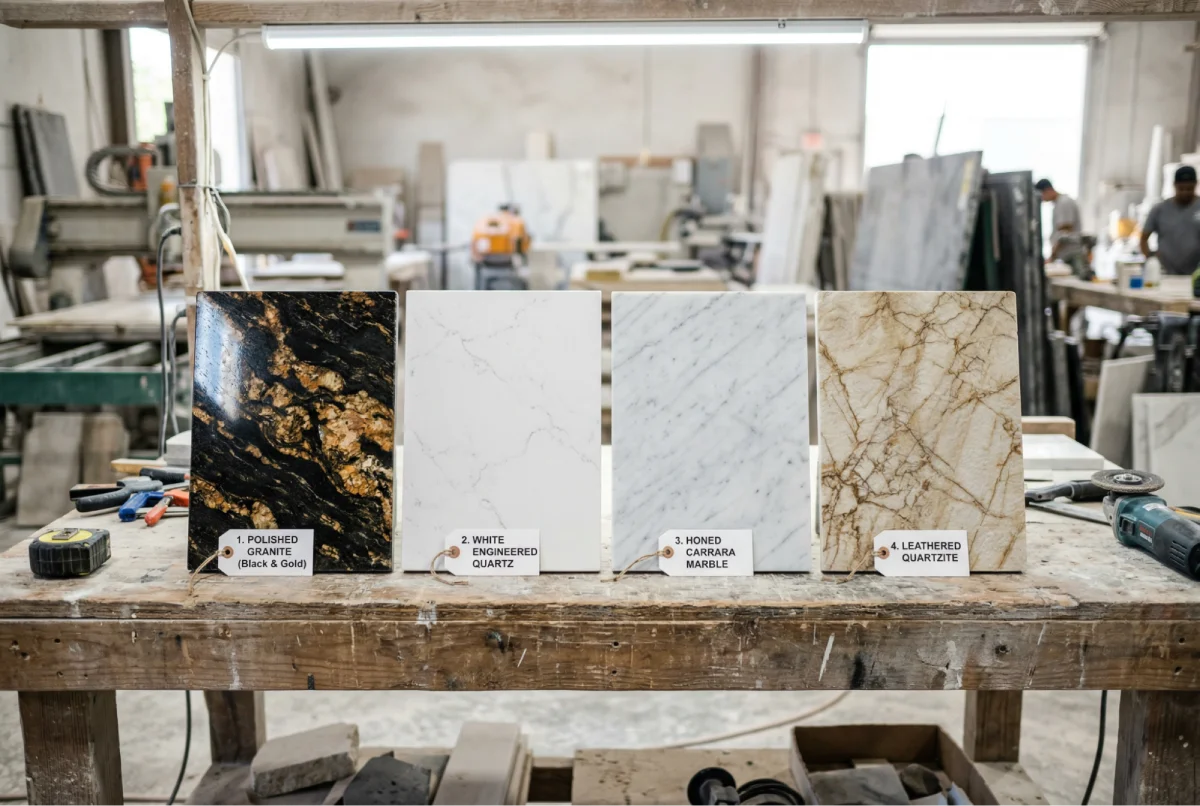
The best countertop material for your home depends on where it’s going, how hard you cook, whether you have kids or pets, and how much maintenance you’re realistically willing to do. There’s no universal winner — only the right match for how you actually live.
This is where most guides get it wrong. They rank materials from “best” to “worst” as if everyone uses their kitchen the same way. They don’t. A professional home chef who cooks with cast iron has different needs than a family that mostly reheats and entertains. Here’s how to match materials to real lifestyles:
For Heavy-Use Kitchens
If you cook daily with hot pans, sharp knives, and acidic ingredients, granite and quartzite are your strongest options. Both tolerate direct heat (though using trivets is still smart), resist scratching, and hold up to decades of abuse when properly sealed. Granite & Marble Designs has installed granite countertops in Denver restaurant kitchens that still look sharp after 10+ years of commercial use.
For Low-Maintenance Households
Quartz wins on convenience. No sealing, no special cleaners, no worrying about staining from red wine. Wipe it down with soap and water. Done. It’s why quartz dominates bathroom vanities and rental properties — the maintenance requirement is essentially zero.
For Design-Forward Spaces
Marble and exotic granite deliver visual drama that engineered materials can’t match. A Calacatta marble waterfall island is a statement piece. Blue Dunes granite with its silvery movement catches light differently throughout the day. These materials require more care, but for homeowners who treat their kitchen as a design centerpiece, the tradeoff is worth it.
For Outdoor Kitchens in Colorado
This one is critical for Denver homeowners. Not every material survives outdoor exposure in Colorado. You need a surface that handles UV exposure, temperature swings from 95°F summers to below-zero winters, and occasional hailstorms.
- Safe for outdoor use: Granite (with annual outdoor-grade sealing), quartzite, porcelain/Dekton
- Not recommended outdoors: Quartz (resin discolors in UV), marble (too porous for freeze-thaw)
| Lifestyle Factor | Best Material Match | Why |
| Daily heavy cooking | Granite or quartzite | Heat and scratch resistance |
| Zero maintenance | Quartz | Non-porous, no sealing |
| Design statement piece | Marble or exotic granite | Unique veining, visual depth |
| Outdoor kitchen | Granite or porcelain | UV and freeze-thaw stable |
| Kids and pets | Quartz or granite | Stain-resistant, durable |
| Bathroom vanities | Quartz or marble | Moisture handling, aesthetics |
| Budget-conscious | Granite remnants | Quality stone at reduced cost |
Key Takeaways
- Takeaway 1: Granite remains the most versatile countertop material for Denver, handling heat, scratches, and Colorado’s climate better than most alternatives.
- Takeaway 2: Quartz offers unmatched convenience with zero sealing, but can’t be used outdoors and is sensitive to thermal shock and direct sunlight.
- Takeaway 3: Marble is a premium design choice best suited for bathrooms and low-use kitchen areas — not for families who cook heavily with acidic ingredients.
- Takeaway 4: Quartzite delivers marble aesthetics with granite-level durability, making it the strongest option for homeowners who want beauty and performance.
- Takeaway 5: Colorado’s dry climate and temperature swings affect sealer performance and material durability, making local expertise essential for outdoor installations.
- Takeaway 6: No material is universally “best” — the right countertop depends on your cooking habits, maintenance tolerance, and where the surface will be installed.
How to Choose the Right Countertop Material With Confidence
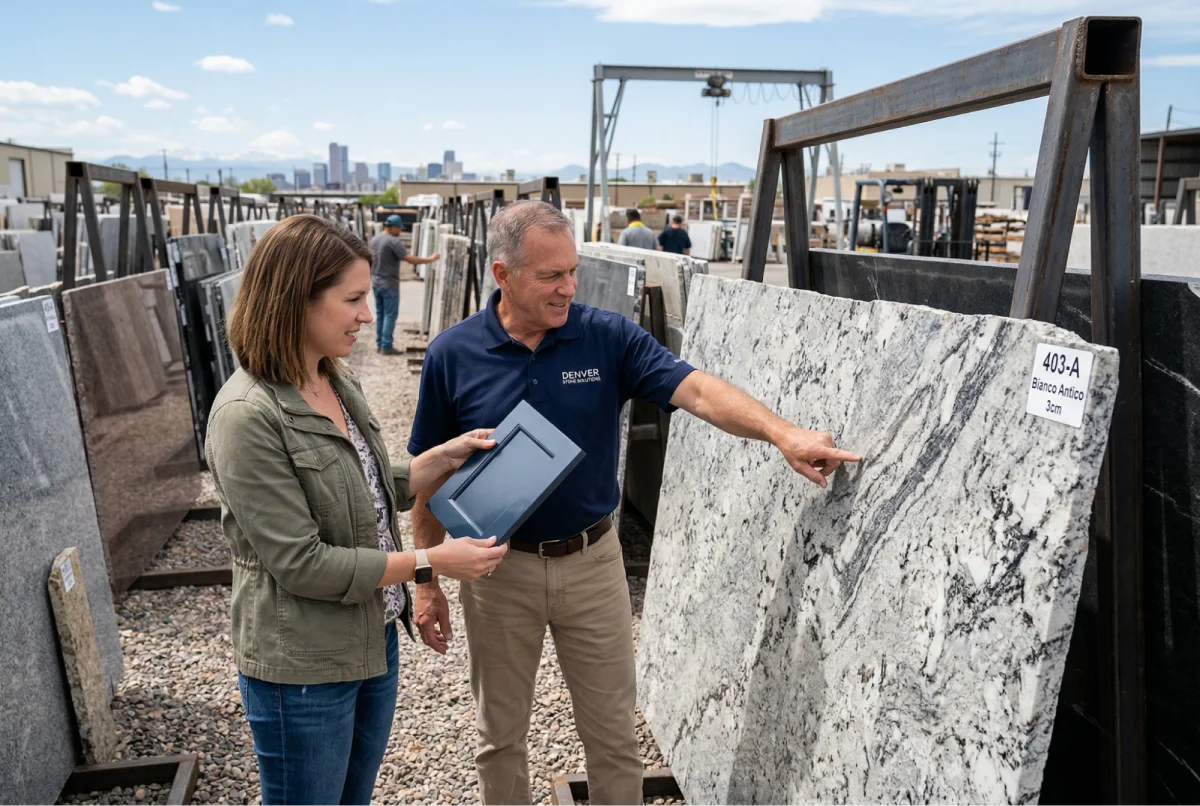
Start by visiting a stone showroom where you can see and touch full slabs — not just 4-inch samples. Bring your cabinet door or paint swatch for color matching, ask about each stone’s maintenance requirements, and work with a fabricator who’ll give you honest guidance rather than push whatever’s in stock.
Choosing a natural stone supplier shouldn’t feel overwhelming. But it often does because homeowners try to make the decision entirely online. Countertop colors look different under showroom lights than they do in your kitchen. A 4-inch sample from a big box store can’t show you how a slab’s veining will flow across an 8-foot island.
Here’s what GMD recommends after guiding thousands of Denver homeowners through this exact decision:
Step 1: Know Your Non-Negotiables
Before you visit any showroom, answer three questions honestly. How much maintenance are you willing to do? (Be realistic — “I’ll seal it every year” is easy to say in January and easy to forget by July.) Where is this countertop going — kitchen, bathroom, outdoor? And what’s your realistic budget range, including fabrication and installation?
Step 2: See Full Slabs, Not Samples
At Granite & Marble Designs‘ Denver showroom on Pecos Street, clients view full slabs before making any commitment. The vein pattern you love on a small sample might look busy across a large island. Or it might look even better. You won’t know until you see it at scale.
Step 3: Ask the Hard Questions
A good stone supply company will tell you what a material can’t do, not just what it can. Ask about heat tolerance, staining risk, sealing frequency, and how the material performs specifically in Colorado’s climate. If a salesperson tells you marble is maintenance-free or that quartz handles outdoor heat, find a different supplier.
Step 4: Get Expert Fabrication Guidance
The material you choose affects how it’s fabricated, what edge profiles are possible, and where seams can be placed. Harder materials like quartzite require more experienced fabricators and specialized CNC equipment. Softer materials like marble need careful handling to prevent chipping during edge profiling. The right custom stone supplier walks you through these details before you commit — not after.
Granite & Marble Designs offers free design consultations that include material comparison, slab selection assistance, and fabrication guidance. With over 100 years of combined artisan experience across their team, their StoneDoneRight™ process ensures you’re making an informed choice backed by people who’ve done this thousands of times in Denver homes.
Conclusion
Picking the right countertop material is one of the most impactful decisions in any kitchen or bathroom renovation. Granite, quartz, marble, quartzite, and porcelain each bring real strengths — and real tradeoffs. The key is matching the material to your lifestyle, your space, and Colorado’s unique climate conditions.
Don’t try to make this decision from a screen. Contact Granite & Marble Designs for a free consultation where you can compare full slabs, get honest guidance from experienced stone professionals, and walk away knowing exactly which material is right for your Denver home.
Frequently Asked Questions
What is the most durable countertop material for Denver kitchens?
Quartzite and granite rank highest for durability in Denver kitchens. Both resist heat, scratching, and daily wear while tolerating Colorado’s dry climate with proper sealing.
Is quartz better than granite for countertops?
Neither is universally better. Quartz requires less maintenance and offers consistent patterns. Granite handles heat better, works outdoors, and provides unique natural beauty. Your cooking habits and maintenance tolerance decide the winner.
Can marble countertops handle a busy kitchen?
Marble etches from acidic foods and stains more easily than granite or quartz. It works well in bathrooms, baking stations, and low-use kitchen areas, but heavy-use kitchens benefit from harder materials.
What countertop materials work for outdoor kitchens in Colorado?
Granite with outdoor-grade sealing, quartzite, and porcelain slab materials like Dekton handle Colorado’s freeze-thaw cycles and UV exposure. Quartz and marble should not be used outdoors.
How often do stone countertops need to be sealed in Denver?
Most granite and quartzite countertops need resealing every 12 to 18 months. Denver’s dry air can cause sealers to evaporate slightly faster than in humid climates. Quartz and porcelain don’t require sealing.
What’s the difference between quartz and quartzite countertops?
Quartz is an engineered product made from crushed stone and resin. Quartzite is a natural stone — sandstone transformed by heat and pressure. Quartzite is harder, handles heat better, and works outdoors, but costs more to fabricate.
Are granite countertops outdated?
Granite remains one of the most installed countertop materials in Denver. Design trends have shifted toward lighter colors and leathered finishes, but granite’s durability, heat tolerance, and natural uniqueness keep it relevant.
What countertop material has the lowest maintenance?
Engineered quartz requires the least maintenance — no sealing, no special cleaners, just soap and water. Porcelain slab materials are similarly low-maintenance.
How do I choose between so many countertop options?
Start by identifying your must-haves: maintenance level, heat exposure, indoor or outdoor use, and design preference. Then visit a showroom to see full slabs and get expert guidance from an experienced fabricator.
Does the countertop material affect fabrication cost?
Yes. Harder materials like quartzite and porcelain require specialized cutting equipment and more fabrication time, which increases cost. Softer or standard materials like most granites and quartz are more straightforward to fabricate.