
Best Outdoor Kitchen Countertop Materials for Denver
The best countertop materials for Denver outdoor kitchens are granite and porcelain, because they resist UV fading, freeze-thaw cycling, and temperature swings. Quartz is not suited to outdoor use because UV degrades its resin binder. Denver’s intense sun, altitude, and freeze-thaw winters make weather resistance the deciding factor for outdoor stone.
An outdoor kitchen faces conditions an indoor kitchen never sees: direct UV exposure, freeze-thaw cycling, wide daily temperature swings, and moisture. Denver’s high-altitude climate intensifies all of these, which means the material that works beautifully inside a home can fail outdoors within a season. Choosing the right stone for an outdoor kitchen is less about looks and more about weather resistance.
The good news is that a few materials handle Denver’s outdoor conditions extremely well, and one very popular indoor material does not belong outside at all. Understanding why each material behaves the way it does under sun, cold, and moisture lets a homeowner build an outdoor kitchen that still looks right after years of Colorado seasons. An experienced Denver natural stone installer builds outdoor kitchens to handle exactly these conditions.
Why Denver’s Climate Is the Deciding Factor
Denver’s climate stresses outdoor surfaces in specific ways, and the right material has to withstand all of them at once.
- Intense high-altitude UV. At Denver’s elevation, ultraviolet radiation is stronger than at sea level, and it degrades some materials faster.
- Freeze-thaw cycling. Water that seeps into a porous or improperly sealed surface expands when it freezes, which can crack or spall the stone over repeated winters.
- Wide temperature swings. A sunny Colorado day followed by a cold night creates thermal expansion and contraction that stresses materials and seams.
- Moisture and snow. Direct exposure to rain and snow demands a surface that sheds water and resists staining.
A material that fails any one of these tests is a poor outdoor choice, regardless of how good it looks. This is why the indoor favorite, engineered quartz, is the wrong pick outside, while natural granite and manufactured porcelain excel.
Granite: The Natural Outdoor Standard
Granite is the traditional and still excellent choice for outdoor kitchens. As a natural igneous stone formed under heat and pressure, it is inherently durable, hard, and stable across temperature swings.
Granite resists UV without fading because its color comes from natural minerals rather than dyes or resins that sunlight can break down. It tolerates heat and cold well, which suits Denver’s daily temperature swings and its freeze-thaw winters. The one requirement is proper sealing: because granite is porous, an outdoor installation needs a quality sealer and periodic resealing to prevent water intrusion that could cause freeze-thaw damage. A darker, denser granite with a flamed or leathered finish is particularly well suited to outdoor use because it hides wear and provides grip when wet. Comparing granite countertops with outdoor durability in mind narrows the field to the densest, most weather-stable options.
Porcelain: The Modern Weatherproof Choice
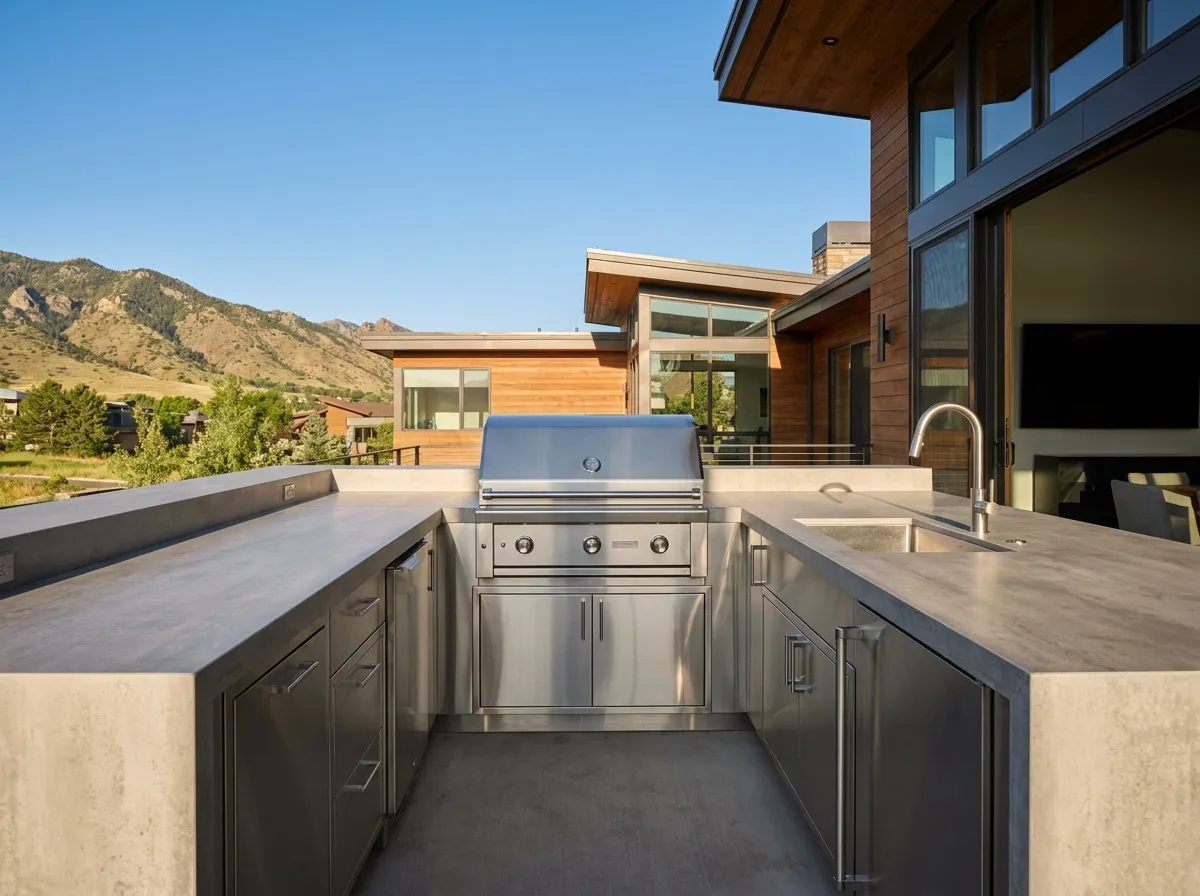
Porcelain has become a leading outdoor countertop material because it is engineered to resist almost everything the weather can do. It is a manufactured surface fired at extremely high temperatures, which makes it exceptionally dense and durable.
Porcelain is highly UV-stable, so its color does not fade in Denver’s intense sun, and it is non-porous, so it resists water intrusion and the freeze-thaw damage that follows. It handles heat and cold without issue and resists scratches and stains. Large-format porcelain slabs come in realistic stone and concrete looks, giving designers flexibility. The main consideration is fabrication: porcelain requires a skilled fabricator because it can chip if cut or handled improperly, which makes the choice of shop especially important. For a contemporary outdoor kitchen that needs to shrug off weather, porcelain is often the top pick. Skilled porcelain countertop installation is what makes this durable material perform as intended.
Why Quartz Does Not Belong Outdoors
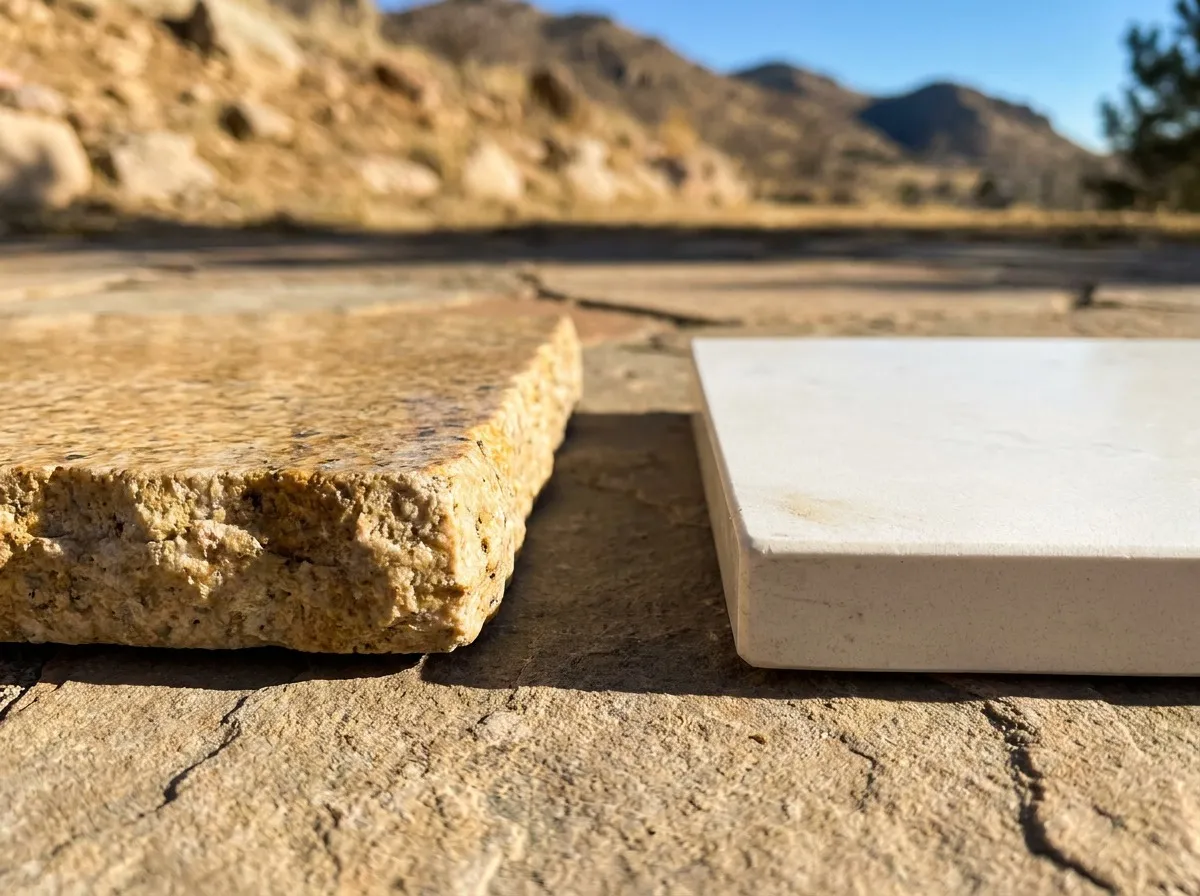
Engineered quartz is the most popular indoor countertop material, which leads many homeowners to assume it works outdoors too. It does not, and the reason is specific.
Quartz is made from ground natural quartz bound with a polymer resin. That resin is the problem outdoors: UV radiation breaks down the resin binder over time, causing the surface to fade, discolor, and eventually degrade. In Denver’s high-altitude sun, this happens faster than at lower elevations. Most quartz manufacturers explicitly void their warranty for outdoor installation for exactly this reason. A quartz countertop that looks perfect indoors will yellow and break down outside, so it should be reserved for interior use. Homeowners who love the quartz look for an outdoor space are better served by a UV-stable porcelain that mimics it.
Other Outdoor-Capable Options
Beyond granite and porcelain, a few other materials can work outdoors with the right expectations. Soapstone is non-porous and naturally stable, handling weather well, though it is softer and develops a patina. Some dense quartzites perform outdoors when properly sealed, offering dramatic looks with natural durability. Concrete is another option, though it requires sealing and can crack over freeze-thaw cycles if not properly reinforced. Each of these has a place, but granite and porcelain remain the most reliable, lowest-risk choices for Denver’s specific climate. The broader countertop materials range gives homeowners options, but outdoor use narrows the practical list considerably.
Design and Installation Considerations Outdoors
Choosing the right material is the first step; installing it for outdoor durability is the second. An outdoor countertop needs a properly built and supported base structure, because stone is heavy and the substructure is exposed to the same weather. Drainage matters: the surface and its supports should shed water rather than trap it, which reduces freeze-thaw risk. Seams should be minimized and sealed with weather-appropriate materials.
Edge profiles also matter outdoors. A simple, robust edge stands up better to outdoor use than a delicate profile that can chip. Finish selection affects safety too, since a honed, flamed, or leathered surface provides more grip when wet than a high-polish finish that becomes slippery. The Outdoor kitchen{:target=”_blank”} has grown from a simple grill station into a full second kitchen for many Denver homes, and the countertop has to be built to handle both the cooking and the weather.
Key Takeaways
- Denver’s high-altitude UV, freeze-thaw cycling, and temperature swings make weather resistance the deciding factor for outdoor countertops.
- Granite is the natural outdoor standard: UV-stable, temperature-tolerant, and durable when properly sealed against freeze-thaw.
- Porcelain is the modern weatherproof choice: UV-stable, non-porous, and durable, though it requires skilled fabrication.
- Quartz does not belong outdoors because UV degrades its resin binder, and most manufacturers void the warranty for outdoor use.
- Soapstone, dense sealed quartzite, and reinforced concrete can work outdoors with the right expectations.
- Outdoor installation requires a supported base, good drainage, minimized seams, robust edges, and a slip-resistant finish.
Frequently Asked Questions
What is the best countertop material for a Denver outdoor kitchen?
Granite and porcelain are the two best choices for Denver outdoor kitchens. Granite is a natural stone that resists UV fading and temperature swings and only needs proper sealing to handle freeze-thaw. Porcelain is a manufactured surface that is UV-stable, non-porous, and highly durable. Both stand up to Denver’s intense sun and freeze-thaw winters, which is exactly what an outdoor countertop must survive. The choice between them usually comes down to look and budget.
Can I use quartz for an outdoor kitchen?
No, quartz is not suitable for outdoor use. Engineered quartz contains a polymer resin binder that ultraviolet light breaks down over time, causing fading, discoloration, and eventual degradation. Denver’s high-altitude sun accelerates this. Most quartz manufacturers explicitly void their warranty for outdoor installation. Homeowners who want the quartz look outdoors should choose a UV-stable porcelain that mimics it instead, since porcelain is engineered to withstand sun exposure.
Why does Denver’s climate matter so much for outdoor countertops?
Denver’s climate combines several stresses that outdoor surfaces must withstand: high-altitude UV that is stronger than at sea level, freeze-thaw cycling that can crack porous or unsealed stone, wide daily temperature swings that cause expansion and contraction, and direct moisture. A material that fails any one of these tests is a poor outdoor choice. This is why weather resistance, not appearance, is the deciding factor for outdoor stone in Colorado.
Does granite need sealing for outdoor use?
Yes, and it is more important outdoors than indoors. Granite is porous, so an outdoor installation needs a quality sealer and periodic resealing to prevent water from seeping in. If water intrudes and then freezes during a Denver winter, it expands and can crack or spall the stone. Proper sealing keeps water out and protects against freeze-thaw damage. A denser granite with a flamed or leathered finish also holds up especially well outdoors.
Is porcelain durable enough for an outdoor kitchen?
Yes, porcelain is one of the most durable outdoor countertop materials available. It is fired at extreme temperatures to become dense and non-porous, so it resists UV fading, water intrusion, freeze-thaw damage, scratches, and stains. The main consideration is not durability but fabrication, since porcelain requires a skilled shop to cut and install without chipping. Once properly installed, porcelain shrugs off Denver weather and holds its color for years.
What finish is best for an outdoor countertop?
A honed, flamed, or leathered finish is generally better outdoors than a high-polish finish. Textured finishes provide more grip when the surface is wet from rain or snow, which is a safety consideration around an outdoor cooking and gathering space. They also hide wear and minor scratches better than a mirror polish. On granite especially, a flamed or leathered finish suits outdoor use and complements the rugged look of many Denver outdoor kitchens.
Will an outdoor countertop crack in Denver winters?
A properly chosen and installed outdoor countertop should not crack in Denver winters. Cracking and spalling happen when water intrudes into porous or unsealed stone and freezes. Choosing a non-porous material like porcelain, or a properly sealed dense granite, prevents water intrusion. A well-built, well-drained support structure and minimized, sealed seams further reduce risk. The combination of the right material and correct installation is what protects against freeze-thaw damage.
Can I match my outdoor countertop to my indoor kitchen?
You can create a coordinated look, but the outdoor material usually needs to differ from an indoor quartz. If the indoor kitchen uses quartz, an outdoor porcelain in a similar tone can visually echo it while surviving the weather. If the indoor kitchen uses granite, a similar granite can often be used outdoors with proper sealing. The goal is visual harmony using weather-appropriate materials, not identical materials that would fail outside.
Does an outdoor countertop need a special base structure?
Yes. Stone countertops are heavy, and outdoor installations require a properly built and supported base that can carry the weight and withstand the same weather as the countertop. Good drainage is important so water sheds away rather than pooling, which reduces freeze-thaw risk. The substructure material should be weather-rated. A skilled fabricator evaluates the base structure as part of planning an outdoor kitchen, because the best countertop still needs sound support beneath it.
How do I keep an outdoor stone countertop looking good?
Regular care keeps an outdoor countertop looking its best. For granite, reseal periodically and clean with a stone-safe cleaner. For porcelain, routine cleaning is usually all that is needed because it is non-porous. Clearing snow and standing water, especially before hard freezes, protects against freeze-thaw stress. Covering or protecting the countertop during the harshest winter stretches can extend its appearance, though quality outdoor materials are built to handle exposure.
Next Step
The best outdoor countertop starts with a weather-appropriate material and a fabricator who understands Denver’s climate demands. The next step is choosing a material and planning an installation built to last through Colorado seasons.
Author
Elliot Nunes Lead Design Consultant and Senior Stone Specialist Granite and Marble Designs, Denver, CO 80221
Elliot Nunes leads design consultation at Granite and Marble Designs in Denver, where 18 years of fabrication have shown which materials survive Colorado’s outdoor conditions and which fade or crack within a season. The homeowners who choose granite or porcelain for outdoor kitchens, and seal and support them correctly, end up with spaces that still look right after years of high-altitude sun and freeze-thaw winters.