
What Countertop Warranties Actually Cover
Countertop warranties come in two layers: the manufacturer’s material warranty and the fabricator’s workmanship warranty. The material warranty covers manufacturing defects in engineered stone; the workmanship warranty covers fabrication and installation. Most homeowner problems fall under workmanship, so the fabricator’s written warranty terms matter more than the headline material warranty number.
A countertop warranty sounds like a simple promise, but it is actually two separate agreements that cover different things, exclude different things, and are honored by different parties. Homeowners who understand the two layers know exactly who to call when a problem develops and what to expect when they do.
The confusion is understandable. A quartz manufacturer advertises a lifetime warranty, and the homeowner assumes every future problem is covered. In practice, the manufacturer’s warranty covers manufacturing defects in the slab itself, while the day-to-day issues that actually arise (seam separation, a lifting edge, a chip at the sink) fall under the fabricator’s workmanship warranty. Knowing the difference before a problem develops saves frustration later.
The Two Layers of Countertop Warranty
Every fabricated countertop carries two potential warranties, and they cover different failure modes.
- Manufacturer material warranty. Issued by the maker of engineered quartz or, in some cases, the supplier of natural stone. Covers manufacturing defects in the product.
- Fabricator workmanship warranty. Issued by the shop that cut and installed the countertop. Covers fabrication and installation quality.
Natural stone (granite, marble, quartzite) generally does not carry a manufacturer warranty in the way engineered quartz does, because it is a natural product with inherent variation rather than a manufactured one. For natural stone, the fabricator’s workmanship warranty is the primary protection. This is one reason the fabricator’s written terms deserve close attention regardless of material. Quality stone fabrication is what a workmanship warranty ultimately stands behind.
What the Manufacturer Material Warranty Covers
Engineered quartz manufacturers typically offer warranties ranging from 10 years to lifetime on residential installations. These warranties cover defects in the manufactured product, such as:
- Manufacturing flaws in the slab (voids, inconsistent curing, structural defects).
- Premature surface degradation not caused by misuse.
- Color or pattern defects present at manufacture.
The important limitations: material warranties usually apply only to residential installations, only to the original owner, and only when the countertop was installed by a certified fabricator. They also require that the stone was used as intended (indoor, not subjected to excessive heat, cleaned with approved products). A quartz slab used outdoors or damaged by a hot pan is outside the material warranty.
Manufacturer warranties also generally cover only the material, not the labor to remove and reinstall. A homeowner with a genuine material defect may have the slab replaced under warranty but still face fabrication and install labor, unless the fabricator’s own warranty covers that portion.
What the Fabricator Workmanship Warranty Covers
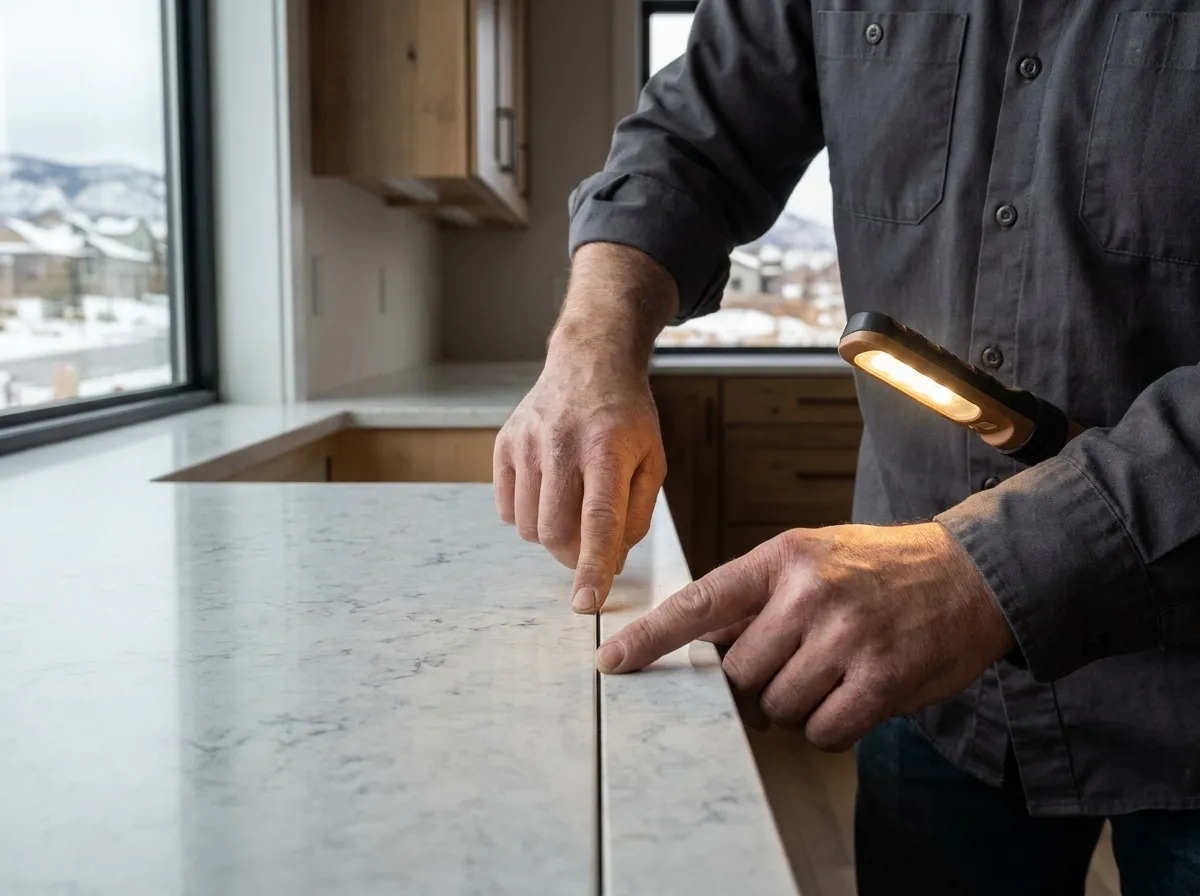
The workmanship warranty is where most real-world claims live, because the issues homeowners actually encounter are usually fabrication or install related, not material defects. A quality workmanship warranty covers:
- Seam failures. Separation, cracking, or visible lifting at a seam.
- Installation defects. Countertops that are not level, overhangs that are unsupported, or lippage between pieces.
- Edge and cutout quality. Chips or fabrication flaws at edges, sink cutouts, and cooktop openings that were present at install.
- Adhesion problems. Countertops that shift or lift because of inadequate setting.
Workmanship warranties are typically shorter than material warranties, commonly 1 to 5 years, because installation defects almost always reveal themselves early. A seam that was going to fail usually fails in the first season of temperature and humidity cycling, not in year 12. The written workmanship warranty should specify duration, what is covered, what is excluded, and the claim process. The details of care that keep a warranty valid are worth reviewing on the maintenance and warranty page before any problem develops.
What Warranties Typically Exclude

Understanding exclusions prevents the disappointment of a denied claim. Both warranty layers commonly exclude:
- Damage from misuse. Cutting directly on the surface, standing on the counter, or dropping heavy objects.
- Thermal damage. Placing hot pans directly on quartz, which can scorch or crack the resin binder.
- Chemical damage. Using harsh or abrasive cleaners that etch or dull the surface.
- Natural stone variation. Color, veining, and pitting inherent to natural stone are features, not defects, and are excluded.
- Water and sealing neglect. Staining on natural stone that was not sealed or resealed as recommended.
Natural stone variation is worth emphasizing because it is the most common source of misunderstanding. A homeowner who expected a granite slab to look exactly like the small sample may perceive the natural veining variation as a defect, but it is the defining characteristic of natural stone and is never a warranty issue. A good fabricator sets this expectation during slab selection, ideally by having the customer approve the actual slab rather than a sample.
How to Read a Warranty Before Signing
The time to evaluate a warranty is before the contract is signed, not after a problem develops. A homeowner reviewing warranty terms should confirm several things.
First, the warranty is in writing and presented before signing, not promised verbally. A verbal commitment to “stand behind the work” is unenforceable when a problem develops in year two or when shop personnel change.
Second, the duration and coverage are specific. “Lifetime warranty” with no written terms is a marketing phrase, not a contract. The useful warranty names a duration, lists what is covered, lists what is excluded, and describes the claim process and response timeline.
Third, the transfer terms are clear if resale matters. Some warranties are limited to the original owner; others transfer to a buyer. Homeowners planning to sell within the warranty period should know which they have.
Fourth, the claim process is realistic. A warranty that requires the homeowner to ship a countertop to a distant location is effectively no warranty. A local fabricator who will come to the home to evaluate a claim provides real protection.
Why the Fabricator’s Warranty Matters More
For most homeowners, the fabricator’s workmanship warranty is the more consequential document, for a simple reason: the fabricator is local, reachable, and responsible for the work that most commonly needs attention. When a seam separates or an edge chips, the homeowner calls the fabricator, not a distant manufacturer.
This is also why the fabricator’s stability matters. A workmanship warranty is only as good as the shop that stands behind it. An established Denver natural stone installer that has operated for years, carries insurance, and has a documented track record is far more likely to honor a warranty in year three than a shop that may not be in business. The Warranty{:target=”_blank”} as a legal concept is only meaningful when the party issuing it remains available and willing to honor it, which is why choosing an established fabricator is part of choosing good warranty protection.
Key Takeaways
- Countertop warranties have two layers: the manufacturer material warranty and the fabricator workmanship warranty.
- Manufacturer warranties cover manufacturing defects in engineered quartz and usually apply only to residential, original-owner, certified installs.
- Natural stone typically has no manufacturer warranty, so the fabricator’s workmanship warranty is the primary protection.
- Workmanship warranties cover seams, install level, edges, cutouts, and adhesion, and run 1 to 5 years because defects surface early.
- Both layers exclude misuse, thermal and chemical damage, natural stone variation, and sealing neglect.
- The fabricator’s written warranty matters most because most real-world issues are fabrication or install related, and the fabricator must remain available to honor it.
Frequently Asked Questions
What is the difference between a material warranty and a workmanship warranty?
The material warranty is issued by the manufacturer of engineered quartz and covers manufacturing defects in the slab. The workmanship warranty is issued by the fabricator and covers fabrication and installation quality, including seams, level, edges, and cutouts. They are separate agreements honored by different parties. Most homeowner problems fall under the workmanship warranty because they are install-related rather than manufacturing defects.
Does natural stone come with a warranty?
Natural stone like granite, marble, and quartzite generally does not carry a manufacturer warranty the way engineered quartz does, because it is a natural product with inherent variation rather than a manufactured one. For natural stone, the fabricator’s workmanship warranty is the primary protection. This makes the fabricator’s written terms especially important when choosing natural stone.
What does a lifetime quartz warranty actually cover?
A lifetime quartz warranty covers manufacturing defects in the product, such as voids, inconsistent curing, or color defects present at manufacture. It typically applies only to residential installations, only to the original owner, and only when installed by a certified fabricator. It does not cover misuse, thermal damage, or the labor to remove and reinstall the slab, which usually falls under the fabricator’s warranty instead.
Why are workmanship warranties shorter than material warranties?
Because installation defects almost always reveal themselves early. A seam that was going to separate or a countertop that was not set properly usually shows the problem in the first season of temperature and humidity cycling, not years later. A 1 to 5 year workmanship warranty covers the window in which install-related problems actually appear, which is why the shorter term is still meaningful protection.
Is natural stone veining variation covered under warranty?
No. Color, veining, movement, and natural pitting are inherent characteristics of natural stone, not defects, and are excluded from every warranty. This is the most common source of misunderstanding. A good fabricator sets the expectation during slab selection by having the customer approve the actual slab rather than a small sample, so the finished countertop matches what the homeowner agreed to.
What voids a countertop warranty?
Common warranty-voiding actions include cutting directly on the surface, placing hot pans directly on quartz, using harsh or abrasive cleaners, and failing to seal or reseal natural stone as recommended. Using the countertop outside its intended purpose, such as installing an indoor-rated quartz outdoors, also voids the material warranty. Following the care guidelines preserves coverage.
Does a countertop warranty transfer if I sell my home?
It depends on the specific warranty. Some manufacturer warranties are limited to the original owner, while others transfer to a subsequent buyer. Fabricator workmanship warranties vary as well. Homeowners planning to sell within the warranty period should confirm the transfer terms in writing, because a transferable warranty can be a selling point and a non-transferable one ends at closing.
What should I do if a seam separates after installation?
Contact the fabricator who installed the countertop, because seam work falls under the workmanship warranty. A quality fabricator will come to the home, evaluate the seam, and repair or reset it if it falls within the warranty terms and was not caused by misuse. Document the issue with photos and reference the written warranty. Seam issues typically appear early, so prompt reporting supports the claim.
How can I tell if a fabricator’s warranty is trustworthy?
Look for written terms presented before signing, specific coverage and duration, a realistic local claim process, and a fabricator with a stable track record. A warranty is only as good as the shop that stands behind it, so an established, insured fabricator with years of operation is far more likely to honor a claim than a newer or transient shop. Stability is part of warranty quality.
Do I need to register my countertop warranty?
Many manufacturer material warranties require registration within a set period after installation to remain valid, often 30 to 90 days. Fabricator workmanship warranties usually do not require registration but should be kept on file with the contract. Ask the fabricator whether the material warranty needs registration and complete it promptly, because an unregistered material warranty can be denied on a technicality.
Next Step
A countertop warranty is only useful if the homeowner understands its two layers and keeps the written terms on file. The next step is a project backed by a fabricator whose warranty terms are clear and whose track record makes them worth honoring.
Author
Elliot Nunes Lead Design Consultant and Senior Stone Specialist Granite and Marble Designs, Denver, CO 80221
Elliot Nunes leads design consultation at Granite and Marble Designs in Denver, where 18 years of fabrication have shown which countertop problems are genuine warranty issues and which are avoidable through good expectation-setting. The homeowners who read their warranty terms before signing rarely have unpleasant surprises when a question comes up later.